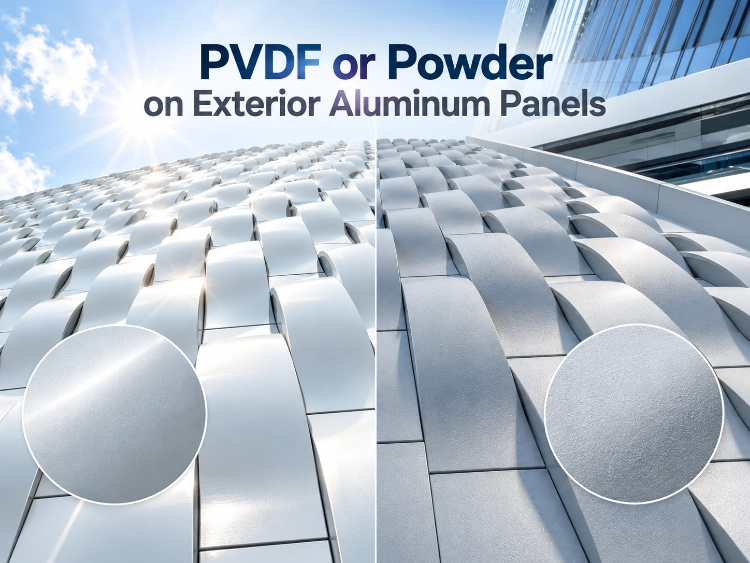
PVDF or Powder on Exterior Aluminum Panels
Coat the aluminum after the finish schedule has named the film. Sun and rain, a bend made after the film has cured, and a scratch touched up on the scaffold are three different duties. "High quality coating" on the elevation picks none of them. We need the duty written down before the panels see a spray booth or a powder line.
Foshan Nanhai Lianxing Deli Decoration Material Co., Ltd. publishes the panel families that film has to land on. The single-skin facade panels page is headed "THE ADVANTAGES OF Single skin facade panels." The composite facade panels page is headed "THE ADVANTAGES OF Composite facade panels." Those headings name the panel family. TUODELI is the name on the site. The coating name rides on the finish schedule sent with the panels.
The finish schedule names exposure before it names PVDF or powder
Exterior sun and wet service are a different duty from an interior ceiling
An interior ceiling film and an exterior wall film fail differently. Indoors, the job is color under lamps, and survival of cleaning. Outdoors, the job is color under sun, and grip through rain. A film that holds on a covered soffit can chalk on a south elevation. We need the exposure named: interior, covered exterior, or full weather.
PVDF vs powder coating aluminum is that exposure question first. PVDF, including the resin systems specifiers call Kynar, is the family usually written when the specification is chasing long sun exposure on architectural aluminum. Powder is a baked film, often thicker at the gun, and widely used where the duty is interior or where the spec has accepted a powder system for the exposure in front of it. Neither sentence is a winner. A powder system that the specification has qualified for the project exposure is a specified finish. A PVDF system written onto an interior ceiling because it sounded more architectural is a different product than the ceiling needed. Kynar vs powder coating is the same fork, with the trade name on one side.
Name the exposure on the schedule before the coating family. Then name the coating family, the color, and the document that defines the performance the film has to meet. If that document is a manufacturer standard or a project spec section, cite it. Do not replace the citation with "exterior grade."
Forming after coating can crack a baked film
Forming and coating have an order. We need that order on the schedule.
Cut, bend, then coat, and the film lands on the finished shape, including the outside of the bend. Coat the sheet flat, then bend it, and the cured film has to stretch around the radius. Powder lays down a thicker film at the gun. A thick cured film on a tight return is where cracking shows up. PVDF systems get specified when the project expects some forming after the film. "Some" isn't a radius. The schedule, or the data sheet it cites, has to say whether post-forming is allowed, and to what radius.
Color life misses the brake. Two coatings can both hold color and still split at a return. A cassette return is bent metal. Ask whether that return is formed before the film or after it. Formed after, the coating has to be one the spec allows to bend. Formed before, the coater has to reach the return, the reveal, and the edge. An edge cut after coating stays bare until the spec says how it's treated.
A composite family adds a second line on the schedule. Keep that family and the coating as two lines. A coating chosen for one family doesn't automatically transfer to the other.
Field repair is allowed only if the spec says so
Exterior film gets scratched in shipment, in hoisting, and in the months after handover. The specification either allows a field touch-up or it doesn't. Powder is harder to touch up in place and harder to match in a small batch later, because the color was baked as a batch. PVDF paint vs powder coating shows up here as a repair question, not only as a weathering question. A PVDF system is often specified with a defined touch-up method. A powder system often means the damaged panel is replaced, because a brush touch-up won't match the baked film.
Write the rule. Field touch-up permitted, with the method named. Or panel replacement only. A schedule that says nothing will be read on site as whichever is cheaper that week, and the elevation will show it. Color match across a later replacement panel is a separate line: who holds the master sample, and how long the color has to be matchable. Do not invent a warranty year. If the project has one, it's in the specification, and the year attaches to the coating system named there.
Powder coating vs PVDF architectural arguments also drag in film build, gloss, and volatile content. Those are real differences between chemistries. They are useful only when the spec says which property the project is buying. A thicker film isn't automatically a better exterior film. A lower-gloss powder isn't automatically a match for a PVDF color on the next elevation. Put the property you care about on the schedule: exposure, forming sequence, repair rule, color, gloss. Leave the chemistry to the coating that satisfies those lines.
Which facade families this manufacturer makes
Single-skin and composite are separate published pages
The single-skin page and the composite page are two families. Each page is only a heading: "THE ADVANTAGES OF Single skin facade panels," and "THE ADVANTAGES OF Composite facade panels." Those headings don't describe a layer count, a core, or a coating. They don't take the same finish conversation just because both can sit on the same elevation.
Specify the family first. A finish note that says "aluminum panel, PVDF" can be read as either heading, and the shop will not know which page to build from. Use the headings as the names: single skin facade panels, or composite facade panels. An elevation that uses both needs the break drawn, and two finish lines. A coating note written for one family can be the wrong forming story for the other family on the same wall.
The coating stays on the finish schedule
Once the family is named, the finish schedule still has to name the coating. The page headings don't. Sun exposure, wet service, forming after the film, and field repair are the four items that stop PVDF and powder being treated as synonyms. Color and gloss sit beside them. The standard or project section that defines the film sits under them.
The panel family on the drawing is the one that gets built, single skin or composite. The coating is the finish line that comes with that drawing. A panel released without the finish line has no coating instruction to follow.
What the factory can confirm from the pages it publishes
Named panel families stay inside the product page
What the published pages identify is the panel family: single skin on one page, composite on the other. Confirm the family against the elevation before the finish is discussed, because a coating can't rescue a panel that was the wrong build-up. Joints, stiffeners, and the way the panel meets the backup wall belong to that family and to the shop drawings, not to the paint.
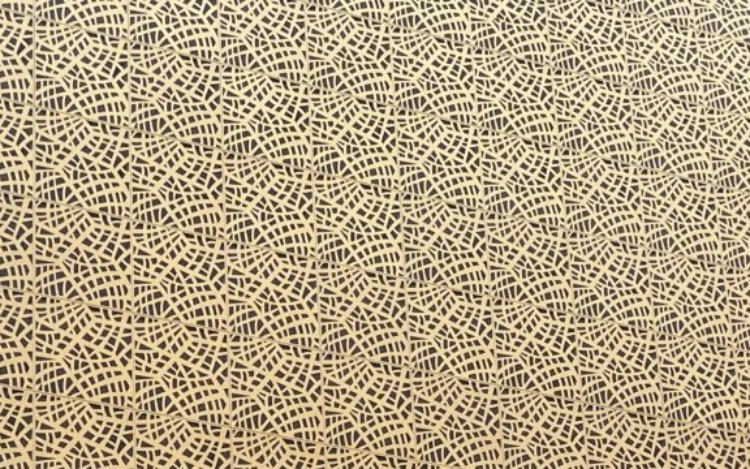
A perforated face or a profiled sheet is a different panel condition. Don't fold it into the single-skin heading or the composite heading because the color matches. One coating system can still run across families, after each family's forming and edge rules have been checked against that system.
An unnamed coating stays a question on the RFQ
A finish schedule that still says neither PVDF nor powder should be questioned, not guessed. Exposure, forming after coating, and field repair are the three answers that usually pick the film, or that show the specification still has to pick it. "Powder coating vs PVDF" with no exposure and no bend comes back as a color chart, and an argument later.
The package that can be priced as a finish is the panel family, the exposure, the forming sequence, the repair rule, the color, and the spec section the film must meet. Foshan Nanhai Lianxing Deli Decoration Material Co., Ltd. can confirm the panel family against the pages it publishes. The coating name has to be on the schedule you send.
Conclusion
A south elevation and a covered soffit want different films. A return bent after the coating isn't the same job as a return coated after the bend. A scratch touched up on the scaffold isn't the same job as a panel that gets replaced. Our single-skin page and our composite page name the panel, not the paint. Put the family on the elevation, then put the coating and the duty on the finish schedule. A color chip by itself isn't that schedule.
FAQs
Q1: Is Kynar the same decision as powder?
A1: Kynar is a name specifiers use for PVDF resin coatings. The decision against powder is still exposure, post-forming, and field repair, not the trade name by itself.
Q2: Can one coating note cover both single skin and composite panels?
A2: Only after each family is identified and its bends and edges are checked against that coating. The two families are different pages. A shared color doesn't make them the same panel.
Q3: What should the enquiry include if the finish isn't chosen yet?
A3: The panel family, the exposure, whether forming happens after coating, whether field touch-up is allowed, and the color target. The coating family is the answer to those lines, not a guess added to make the quote look finished.
Other News