
Aluminum Ceiling Board vs. the Rest: Your Ultimate Guide to Ceiling Types and Their Best Uses
When planning a spaces design or remodel project, you would typically consider elements like walls and flooring, well as furniture choices. However, it's important not to overlook the ceiling as it plays a key role in shaping the ambiance and usability of a room too. This guide delves into various ceiling types with a particular emphasis on aluminum ceiling and their distinct benefits.
The Functional Roles of Ceilings
Ceilings do more than just cover a room. Not do they hide the structural components of the floor and roof, but they also enhance the visual appeal of a space in a significant way. From painting to showcasing architectural details or adding relief patterns, ceilings can really elevate a room's look and feel. Not forget about their functional role: ensuring fire safety standards are met and providing sound and heat insulation while also supporting the building's structure.
Aluminum Ceiling: A Closer Examination
Aluminum ceiling panels have become a choice due to their versatility and effectiveness in modern settings. They provide a stylish and contemporary appearance while also being customizable for different design needs. Aluminum is a durable material that can withstand daily use. They come in a variety of sizes, perforation patterns and textures to match your interior aesthetic preferences.
Types of Aluminum Ceilings
Different styles of aluminum ceilings offer a range of options with features and uses available for various purposes.
Tile ceilings
Tile ceilings are composed of individual panels that are placed in a grid system. They are easy to install and maintain and allow for access to utilities above the ceiling.
Baffle ceilings
Baffle ceilings consist of vertical panels or blades that are suspended from the ceiling. They are effective in improving acoustics by absorbing sound waves. Baffles can also add a unique visual element to a space.
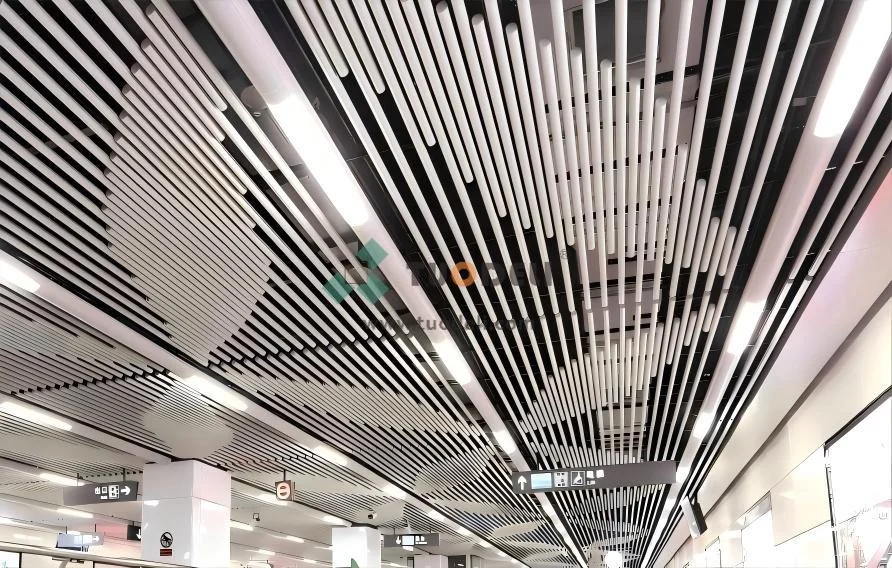
Strip ceilings
Strip ceilings features long narrow panels that create a linear design. They are often used in commercial spaces and hallways.
Open cell ceilings
Open cell ceilings have a grid-like structure that allows for visibility to the area above the ceiling. They are suitable for spaces where an industrial or open design aesthetic is desired.
Benefits Specific to Aluminum
Aluminum ceiling panels can offer so many benefits that make it perfect for several works.
l Lightweight and Easy to Install: Aluminum is a lightweight material, making it easy to transport, handle, and install. This can reduce installation time and costs.
l Resistance to Corrosion and Durability: Aluminum doesn't corrode or get damaged by water. It hence lasts longer and doesn't need much replacement. Stainless steel tiles are high quality and cannot rust; it may last for generations.
l Flexibility in Design: The ceilings made from aluminum come with varied finishes, textures, and color shades that present immense options. Be it the shining look of a polished or industrial or the elegant feel of sleek and minimalist vibe, the aluminum ceilings are workable as per requirement.
Comparison with Other Materials
In renovating or building a new house, the type of ceiling material to be used varies; each has its good qualities and disadvantages that must be considered with great caution while making a decision. Let's delve into how aluminum stacks up against the array of widely used materials for ceilings in terms of its characteristics and performance attributes.
Mineral Fiber Tiles
Mineral fiber drop ceiling tiles are another option for suspended ceilings because they come relatively cheap compared to aluminum-based options; however, they are prone to water damage that may result in warping and staining over time. Metal tiles are much better and not so susceptible to water damage because they are durable and water-resistant. Besides, it takes much less effort to maintain than mineral fiber tiles, and less likely to harbor mold or mildew.
Timber
Wood ceilings add warmth with their natural appeal and temperature factor in design variants starting from simple boards up to detailed patterns of beams. However, the cost of wood tends to be a bit higher compared to other materials, and it also requires more maintenance because it is susceptible to moisture and insects. Aluminum ceilings are more robust, low-maintenance compared to other types.
Choosing the Right Ceiling
Choosing the ceiling involves considering various factors as your individual requirements and personal preferences.
Room Size and Height
The dimensions and height of your room can influence the type of ceiling you choose to install. Larger rooms may look better with cathedral ceilings to create a spacious feel, while smaller rooms could be more suited for flat ceilings or tray ceilings that maintain proportionality.
Lighting Requirements
When thinking about your spaces lighting, design and ceiling type interaction. For example, tray and coffered ceilings provide chances to incorporate ambient lighting fixtures whereas regular and mirrored ceilings tend to lean towards central lighting sources. Metal ceilings can help in improving lighting efficiency by bouncing light throughout the room, which may lessen the requirement for lighting.
Acoustic Needs
When looking to manage sound levels in a room or space, it is essential to take into account the acoustic characteristics of the ceiling material used in the construction or design process of the area. Metal ceilings that possess features can aid in absorbing sound waves effectively and thereby minimizing echoes and unwanted noise within the given space. Baffle ceilings also serve well in terms of absorption. For areas requiring noise reduction measures to be put in place as part of their design strategy or layout plan, suspended ceilings fitted with tiles could prove to be beneficial and practical.
Budget
When deciding which ceiling to choose for your space, remember that your budget plays a role. Certain ceiling styles, such as beamed ceilings, may incur higher costs for installation and upkeep. Standard ceilings are usually more budget-friendly and simpler to take care of in the run. Although the initial cost of metal tiles might be higher, they can provide value over time thanks to their durability and minimal maintenance needs.
Installation
The process of setting up the ceiling can differ based on the type you choose, regular ceilings are usually simple to put in place while intricate designs like vaulted or coffered ceilings might need expertise to install correctly. Suspended ceilings involve hanging a metal grid from the ceiling. Aluminum ceilings are simple to install because of their quality. Some aluminum ceiling systems, like click in timber battens are made for dependable installation.
Maintenance
Various types of ceilings have varying maintenance requirements to keep them in condition. Typical ceilings can usually be cleaned using a duster. On the hand, coffered ceilings with their intricate designs may need more thorough cleaning. Aluminum ceilings are known for being maintenance as they only require occasional dusting to stay clean. Additionally, they are resistant to stains and problems like mold and mildew making them ideal for environments.
Ceiling Board Supplier
Choosing a ceiling provider as a key factor to consider is if the provider can deliver high quality products that align with your design preferences and financial plan. A dependable supplier should be able to present tailored choices along with materials and excellent customer support. For example, TUODELI is a company that focuses on manufacturing metal ceiling systems and wall cladding panels with a history of over 30 years of research and innovation efforts in the industry. They have a product range that includes baffling ceilings as well as strip and open cell ceilings and provide a range of metal ceiling and wall cladding solutions to meet customers and regional market requirements.
FAQs
Here are some common questions people often ask to learn more about types of ceilings and their ideal applications.
1. What is the difference between a vaulted ceiling and a cathedral ceiling?
Cathedral ceilings have an inverted V-shape where the tip of the V is the highest point, while vaulted ceilings have more design flexibility and can have one or more slopes that do not need to mimic the roofline.
2. Are metal ceilings suitable for residential use?
It's also good for residential purposes. They can be modern and sleek for living areas and durable, low maintenance, and resistant to moisture.
3. What are the advantages of a suspended ceiling?
A suspended ceiling masks any wires and ducts, making the ceiling look well-organized while enhancing fire safety and energy efficiency.


