Find Manufacturers That Produce Metal Acoustic Ceiling Tiles.

Search results can deliver dozens of names in minutes. What they rarely establish is whether a particular factory can support the acoustic tile package on a live project. To find manufacturers that produce metal acoustic ceiling tiles, a buyer has to look past the directory entry and inspect the product, acoustic build-up, samples, quality controls, installation assumptions, and quotation basis behind it.
Directory pages, catalogue pages, and factory websites all use similar product language. Their evidence is not equally useful. A practical review therefore starts with the exact tile system, not with a ranking of company names. The checks below can be used before samples are requested or an RFQ is issued.
How to Read a Manufacturer Claim

A claim gains value only when it names the product, the evidence, and the conditions under which it applies. Generic acoustic language leaves the buyer guessing whether the claim covers a tile, a complete ceiling assembly, a laboratory result, or a specific installation. Category-level statements and product-specific evidence need to be kept apart.
The same discipline applies to supplier experience. A company may manufacture ceiling products for many markets, but the buyer still needs to know whether it can support the exact tile format, acoustic build-up, finish, suspension, and site conditions in the current package. The answer should be visible in the documents the manufacturer can provide, not inferred from the breadth of its catalogue.
Exact Product Family
First, establish the exact product offer. Metal acoustic ceiling tiles and metal acoustic ceiling panels belong to the same broad category, yet dimensions, edges, suspension details, and acoustic construction can differ. Two types of acoustic ceiling tiles can look almost identical while using different acoustic and suspension build-ups. When comparing types of acoustic ceiling tiles, ask for the exact family and installation format rather than a generic product label.
The product page should also distinguish the visible tile from the complete assembly. Perforated metal acoustic ceiling panels may rely on an absorptive backing, acoustic tissue, glass fibre, a plenum condition, or a carrier. Each choice can alter the acoustic result and the quotation, so it should be named.
Evidence Behind Acoustic Performance
Ask how the manufacturer supports an acoustic claim. The answer may include a product description, a test report, a laboratory reference, a project condition, or a system drawing. The buyer should identify what was tested, which build-up was used, and whether the result applies to the proposed tile and installation.
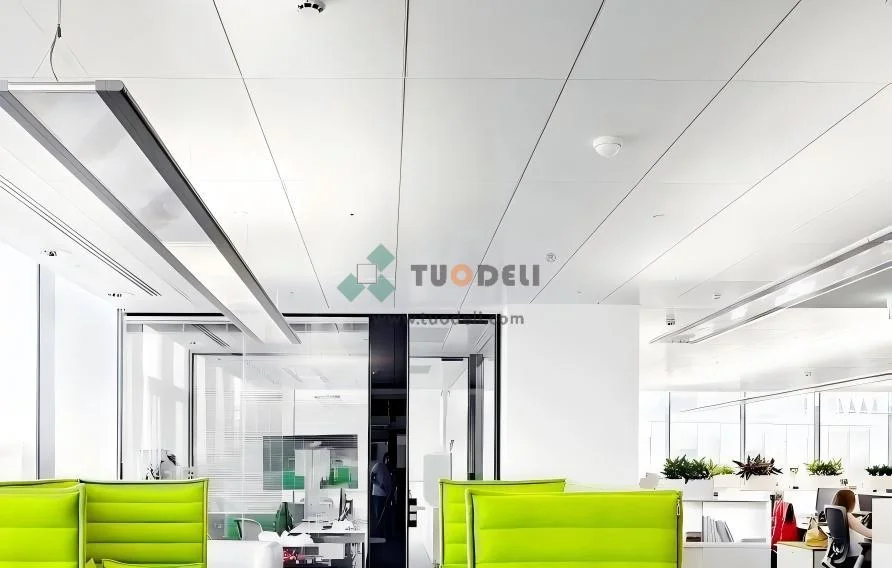
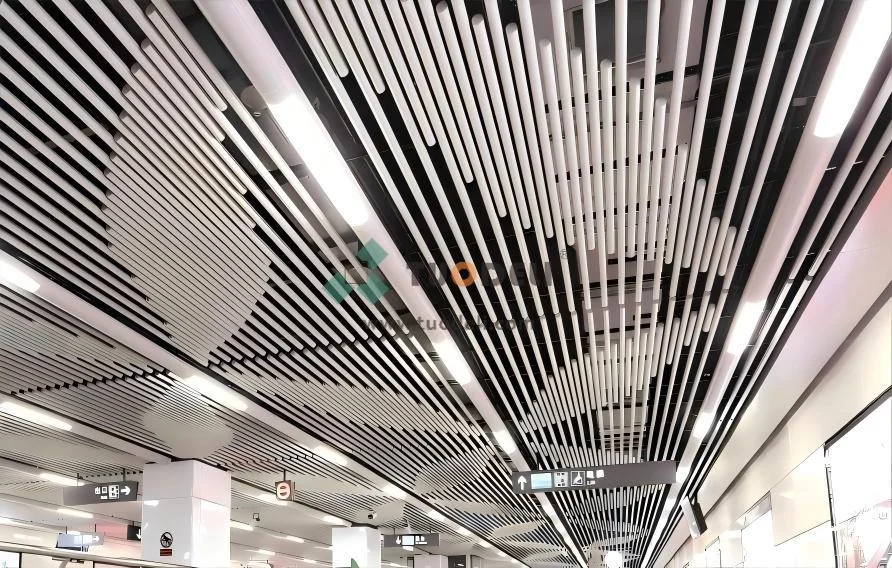
TUODELI’s official tile ceiling page describes perforated metal ceiling tiles that can be treated with acoustic materials such as acoustic tissue or glass fibre wool to improve sound absorption. The same page states an NRC range of 0.5 to 0.9 and a 3-year warranty for interior applications for the described tile system. Those figures should remain attached to that product context; they are not a blanket value for every metal ceiling, wall panel, or project.
What the Tile System Must Prove
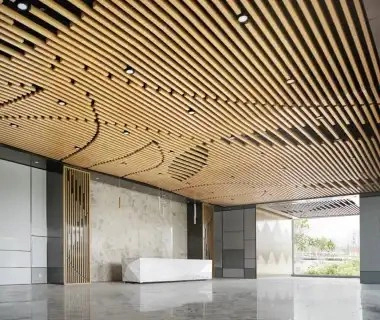
The manufacturer should be able to explain how the proposed product performs as a system. Perforation, acoustic treatment, suspension, tolerances, and access all interact with the base material. A quote for the visible tile alone may leave the most important project assumptions unresolved.
This is also where buyer questions become technical without becoming prescriptive. The buyer does not need to design the manufacturer’s product, but the buyer does need enough information to decide whether the proposal is complete and comparable with another supplier’s offer.
Material and Tile Type
Confirm the base material and tile type before comparing acoustic claims. The official TUODELI tile ceiling page lists aluminum, galvanized iron, and stainless steel as material options for its metal tile systems. Handling, finish, weight, and project implications can vary by material, so the buyer should ask which option is priced and how it affects the system.
The tile type should also be connected to the drawing. Modular tiles, perforated panels, and specialty ceiling elements may share a project, but they are not interchangeable. The manufacturer should state whether the proposed product matches the reflected ceiling plan or requires a design change.
Perforation and Acoustic Build-Up
Perforation is not just a visual pattern. The perforation forms part of the acoustic path and must be described together with the materials behind or above the tile. Ask for the perforation pattern, the intended acoustic build-up, and the evidence connecting them to the proposed performance.
With perforated metal acoustic ceiling panels, request the assembly method, acoustic infill, and any dependence on plenum sealing, cavity depth, or site conditions. The proposal should show how perforation, infill, and suspension work together as one system. Unless those conditions appear in the quotation, the same acoustic result cannot be assumed on site.
Suspension, Installation, and Access
The suspension system and perimeter treatment must be compatible with the tile format. Ask how the tiles are supported, how the grid or carrier is coordinated, and how the assembly handles changes in direction, services, and access. These details affect installation time and the risk of later replacement.
Access should be confirmed before the order. A ceiling may need routine service above it, and the manufacturer should explain whether access is provided through removable tiles, a separate access panel, or another planned route. A system that cannot be maintained without disturbing the finished ceiling is a project risk, even if the product sample looks correct.
How to Compare the Evidence Package
Once technical scope is clear, compare the evidence package rather than the amount of marketing material. Samples, test references, quality controls, packing, delivery, and quotation assumptions should be reviewed in the same order for each manufacturer. This makes the shortlist easier to defend internally.
The purpose is not to make all suppliers look identical. It is to see which company has documented the work it claims to perform and which one has left important conditions open. Those differences matter more than a polished catalogue.
Samples and Quality Controls
A sample should represent the tile, material, finish, perforation, acoustic treatment, and edge condition that will be repeated in production. Record the sample reference and ask what changes would require a new approval. A small colour sample cannot represent the complete acoustic build-up or the installed appearance of a larger ceiling area.
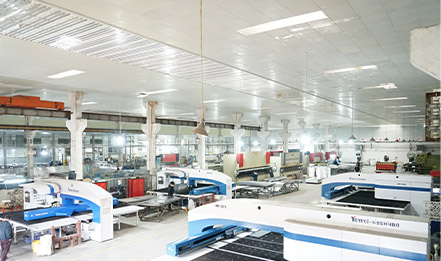
Quality controls should connect the approved sample to the production batch. Incoming material, formed components, finish, and finished tiles should all have defined checks and a record that follows the order. Full internal procedures need not be published, but the controls relevant to the approved product should be explained.
Quotation and Delivery Scope
Compare what each quotation includes and excludes. The scope should identify tiles, suspension or grid components, acoustic materials, perimeter trims, fasteners, samples, inspection records, packing, technical documents, delivery point, and any installation support. Missing accessories can make a low price misleading.
Delivery and packing terms also affect the project. Review identification, protection, handling, storage, and how the order will be matched to the installation sequence. For a large package, predictable delivery and clear product identification reduce the risk of site delays and the need for replacements.
Before You Request Samples
Project Inputs to Send
A sample request works best when every manufacturer receives the same project input. Send the reflected ceiling plan, dimensions, target acoustic scope, tile format, material and finish direction, installation conditions, quantity, delivery location, and sample expectations. Include the evidence each manufacturer should provide, including acoustic build-up details and quality documentation where relevant.
Questions That Should Change the Shortlist
The response should change the shortlist when important evidence is missing. Missing product-family information, an unexplained acoustic build-up, or an unclear quotation basis should keep a supplier off the shortlist until resolved. Close those gaps first; only then request comparable samples from the remaining manufacturers.
Readers who need the product-family context can review tile ceiling options. Buyers comparing adjacent ceiling categories can compare metal ceiling families and review the manufacturer scope before finalizing the RFQ.
Conclusion
Screen metal acoustic ceiling tile manufacturers by the evidence they can attach to the exact tile system, acoustic build-up, sample, installation conditions, and quotation scope. A directory listing or broad supplier claim is not enough. The next step is to send one consistent specification and sample brief to every shortlisted manufacturer so their responses can be compared fairly.
Prepare the reflected ceiling plan, dimensions, acoustic scope, material and finish requirements, quantity, and delivery conditions, then send the project details for technical review.
FAQs
Q1: What should a metal acoustic ceiling tile manufacturer provide before shortlisting?
A1: Ask for the exact tile type, material, perforation pattern, acoustic build-up, sample reference, quality controls, suspension details, quotation inclusions, and any test or performance evidence tied to the proposed system.
Q2: How should acoustic performance evidence be reviewed?
A2: Check what was tested, which tile and acoustic build-up were used, and whether the reported result applies to the project conditions. Keep NRC or similar values attached to the specific product and test context.
Q3: What should be compared in manufacturer quotations?
A3: Compare the same tile scope, acoustic materials, suspension, perimeter treatment, samples, inspection records, packing, delivery, installation assumptions, and exclusions. A total price is not comparable until those items are aligned.
Other News