Why Are Ceiling NRC Ratings Key to Effective Noise Control?
Lighting, floors, walls – all are crucial in helping to create the look and feel. But there is a solitary, sometimes-overlooked component with deeply ingrained impact that is: the ceiling. With that many ceiling designs available, deciding on which one to use is not only a question of how it appears, but how it will perform in sound control within the space. This is where the Noise Reduction Coefficient (NRC) rating comes into play, and becomes the determining factor when it comes to understanding and mastering your ceiling's acoustical performance.
What Does NRC Do for Acoustic Performance?
Ceilings are not just coverings; they play with room sound waves. Varying materials and constructions have an effect on sound absorption. NRC rating quantifies the sound absorption capability of a material, making the creation of pleasant spaces possible.
Definition of Noise Reduction Coefficient
NRC (Noise Reduction Coefficient) is a measure of how much sound a surface absorbs, from 0.00 (sound is totally reflected) to 1.00 (sound is totally absorbed). Certain thick, 3D acoustic panels have an NRC greater than 1.00 because of greater surface area. Greater NRC means better sound absorption.
How NRC Values Are Measured
NRC ratings are a result of third-party laboratory tests of sound absorption at frequencies important to human speech: 250 Hz, 500 Hz, 1000 Hz, and 2000 Hz. The NRC value is a calculation of the average of these frequencies' absorption coefficients. Be wary of fake NRC ratings that may be for raw materials rather than installed products. Acoustic performance may vary in raw materials compared to installed products.
Importance in Ceiling Design
Based on the NRC rating for acoustics, noise control is essential in healthcare, restaurants, classrooms, and offices. NRC values ensure comfort, productivity, and well-being through defining the sound experience independent of the view.
How Do NRC Ratings Affect Office Spaces?
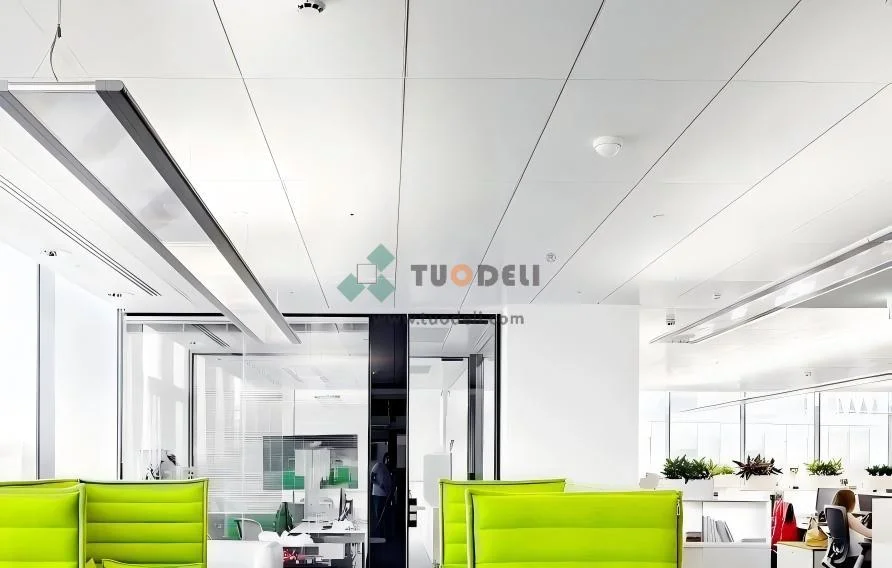
In modern active office spaces, particularly open-plan offices, sound control is essential to maximize efficiency and comfort of the employees. You may have surely had your attention diverted by echoing voices, ringing phones, and general ambient noise in these spaces.
Noise Control in Open Spaces
Open-office spaces tend to be ridden with bad acoustics caused by sound waves bouncing off hard surfaces, leading to loud noise and echo. Sound reflection can be reduced by ceiling systems that have a high NRC rating. Vertical acoustic baffles are particularly effective in big rooms where not much wall space is available, absorb direct and reflected sound, reduce echo, and improve aural conditions.
Benefits to Employees' Comfort
Effective noise control enhances worker comfort and productivity. A quieter workplace enhances concentration, reduces distractions, and alleviates stress and fatigue due to the removal of excess noises. Sound-absorbing office ceilings as an investment translate to a comfortable work environment that enhances morale and productivity.
Ceiling Material Influence
The make-up of your office ceiling material plays a critical role in its NRC rating and consequent acoustic performance. Various materials offer some degree of sound absorption:
l Mineral Fiber Ceiling Tiles: These are widely used in offices due to their intrinsic acoustic benefits, which have excellent NRC ratings and create a high level of noise reduction. Some mineral fiber tiles also contain good resistance against mold and sag.
l Fiberglass Ceiling Tiles: Fiberglass tiles are easy to clean and light in weight and also provide a range of water-resistant and sound reduction benefits, resulting in improved acoustics.
l Metal Ceiling Tiles: Despite typically chosen based on their look and durability factor, some metal ceiling tiles are made with perforations or acoustic backing sound-backed to enhance their sound-absorbing capacity. Metal ceilings are also resistant to termites, easy to maintain, and generally more fire-resistant, hence remaining a clean and hygienic option.
l Wood Ceilings: Wood will add warmth and natural character, and while solid wood will cause sound to bounce, products like tongue-and-groove panels or engineered wood, especially when combined with acoustic treatments, can be utilized to help control sound.
You can see how your choice of ceiling material will directly contribute to the NRC rating and, therefore, the acoustic comfort of your workspace.
Why Are High NRC Ratings Important for Ceilings?
Although any material is graded by the NRC, looking for higher grades in your ceiling, especially in noise rooms, has numerous significant advantages leading to a better functioning and comfortable room.
Sound Absorption Capacities
Now that you know it, the higher the NRC rating, the more sound energy the ceiling is absorbing. That's crucial because if sound waves collide against a very absorptive surface, less of the sound is reflected back into the room. Less reflection of sound is the fundamental principle in upgrading acoustics and getting rid of noise issues.
Reduction of Echo Effects
Inadequate sound absorption results in echo and unwanted reverberation in hard, reflective ceiling surfaces. Ceilings with high NRC levels capture sound reflections, minimizing reverberation and echo levels, creating a more pleasing, clearer sound atmosphere.
Speech Clarity Improvement
High NRC-rated ceilings in conference rooms, meeting rooms, and classrooms enhance speech intelligibility by reducing background noise and echoes. This fosters communication, which leads to successful meetings, improved learning environments, and a comfortable experience for building occupants.
Which Ceiling Systems Optimize NRC Performance?
In order to optimize NRC performance in your building, you have several ceiling systems from which to choose, each of which is engineered with sound absorption as a priority.
Acoustic Ceiling Tiles
Acoustic ceiling tiles absorb sound and are usually made of materials like mineral fiber, fiberglass, or perforated metal. They trap sound waves and are used in suspended ceiling systems to enhance acoustics and lower sound.
Suspended Panel Options
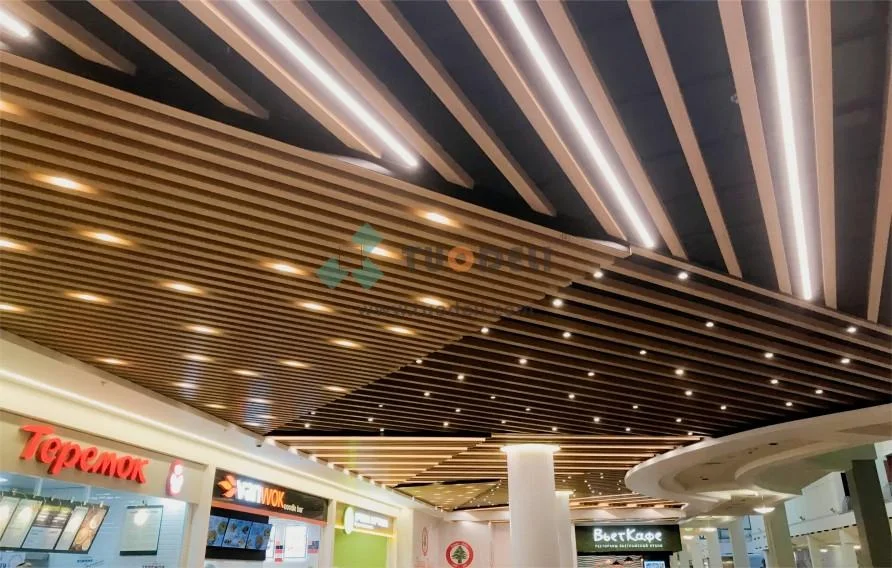
Acoustic clouds and baffles offer sound absorption and design freedom. Baffles hang vertically, appropriate for big rooms. Clouds are horizontal panels occupying more space, yet remaining open but improving acoustics. Both enhance NRC performance with sound absorption from various surfaces.
Perforated Design Features
Wood and metal ceiling finishes are usually perforated with acoustic backing in the interest of achieving maximum sound absorption and NRC ratings. Perforation pattern, size, and density may be customized for specific acoustic use and design value.
NRC rating plays a central role in an effort to achieve ceiling acoustics to the fullest. Material selection with the appropriate NRC values enhances visual delight and acoustic health. Perfect for reducing office noise, reducing echoes in the conference room, and improving speech intelligibility in the classroom. Correct NRC ratings optimize the quality and performance of the interiors.
Why Choose TUODELI as a Reliable Ceiling Supplier?
If you need a reliable partner in fulfilling your ceiling needs, particularly if you are considering the use of metal ceiling solutions, TUODELI is an expert in the field. metal ceilings inside and outside homes for years, TUODELI offers different types of metal ceilings including tile ceilings and baffle ceilings. While their individual products NRC ratings would have to be asked for, their focus on metal ceiling systems means that they should be able to provide long-term and visually appealing solutions for your projects. If your project requires the strength, modern look, and potential acoustic benefits of metal ceilings, consideration of TUODELI's products could be a worthwhile addition to your design process.
FAQs
Q: How good of an NRC rating does an office ceiling need to be?
A: In office spaces, the ideal NRC rating is 0.70+ to reduce reverberation and enhance speech understanding, leading to greater comfort and productivity. For open offices or conference rooms where sound control is critical, use target NRC ratings of 0.80 to 0.90.
Q: Are all ceiling types equal with the same NRC rating?
A: Ceiling products have different NRC ratings. Fiberglass and mineral fiber are sound absorbers, and solid wood and untreated drywall are sound reflectors and thus have low NRC ratings. NRC is affected by thickness, density, and surface treatments like perforations within the same category of material.
Q: Is it possible to increase the NRC rating of my current ceiling?
A: Enhance ceiling acoustics with low NRC by mounting acoustic panels or clouds. Back suspended ceilings with acoustic tiles to absorb sound. Small improvements are to be achieved by using acoustic sprays or coatings. Seal lighting fixtures and HVAC vents to reduce sound transfer.
Other News