Which Linear Baffle Ceiling Factory Supplier Fits a Large Project?

A large ceiling package rarely fails because the product photograph was wrong. It fails when the supplier cannot connect the approved design to a buildable, inspectable, and comparable scope. That is why a linear baffle ceiling factory supplier should be judged by the questions the team can answer together, not by the number of panel profiles shown in a catalogue.
The useful starting point is the project itself. One company may be suitable for an airport ceiling and unsuitable for a retail or office ceiling because the ceiling zones, service coordination, material direction, sample requirements, and commercial scope are different. Buyers comparing linear baffle ceiling factory suppliers should therefore apply the same questions to every candidate instead of allowing each company to define the comparison. The checks below help procurement teams separate a genuinely capable supplier from one that is merely willing to quote.
What Makes a Linear Baffle Ceiling Supplier Suitable for a Large Project?
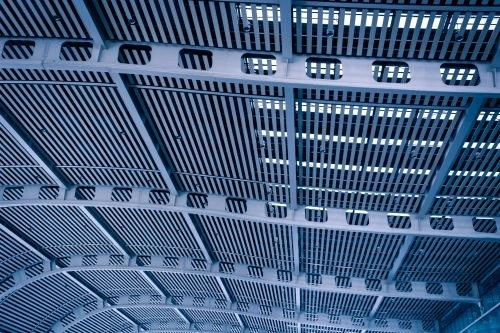
A suitable supplier can turn design intent into a documented review process. The conversation should move from the reflected ceiling plan to the proposed system, then to the sample and production controls, and finally to a quotation that other suppliers can be compared against. If any of those steps is missing, the buyer is comparing presentations rather than project capability.
Large projects also expose coordination gaps quickly. A linear baffle ceiling system crosses lighting, ventilation, sprinkler, access, structure, and perimeter conditions. It does not need to own every trade, but it should identify the interfaces that change the panel layout or fixing strategy. That is the practical difference project teams are looking for when they compare aluminum metal baffle ceiling manufacturers.
TUODELI presents baffle ceilings within a metal ceiling portfolio that also includes tiles, strips, open-cell, expanded, and special ceiling families. The official baffle page describes metal baffle ceiling systems as suspended linear metal panels available in different sizes, finishes, and configurations. It also describes the open structure as supporting acoustic performance, air circulation, lighting integration, and maintenance access. Those descriptions establish the product-family context; they do not remove the need to verify the exact system, finish, and project conditions for the order.
Project Geometry and Interface Fit
Begin with the ceiling zones that actually carry the design intent. Review the reflected ceiling plan, elevations, sections, and any transition between flat ceilings, open areas, bulkheads, and perimeter returns. Ask how the baffle direction changes at those boundaries and whether the proposed spacing remains consistent after lights, diffusers, and access points are coordinated.
A capable candidate should be able to mark up the drawing rather than reply only with a standard product sheet. A useful response identifies the dimensions that control fabrication, the tolerances that affect alignment, and the site conditions that must be confirmed before production. This does not prove that every project condition has been solved, but it shows whether the supplier can work inside the buyer's review process.
Comparable Specification Evidence
Ask each candidate to describe the same scope in the same format. The comparison should cover the baffle profile, system components, material and finish direction, acoustic build-up, suspension method, perimeter treatment, and the assumptions behind installation. A generic category description makes the next stage harder.
For buyers reviewing aluminum metal baffle ceiling manufacturers, the most useful evidence is a traceable product scope rather than a claim that the company offers many options. Which system is proposed should be clear, along with what it includes, what it excludes, and which details still require project confirmation.
Which System and Material Checks Should Buyers Verify?
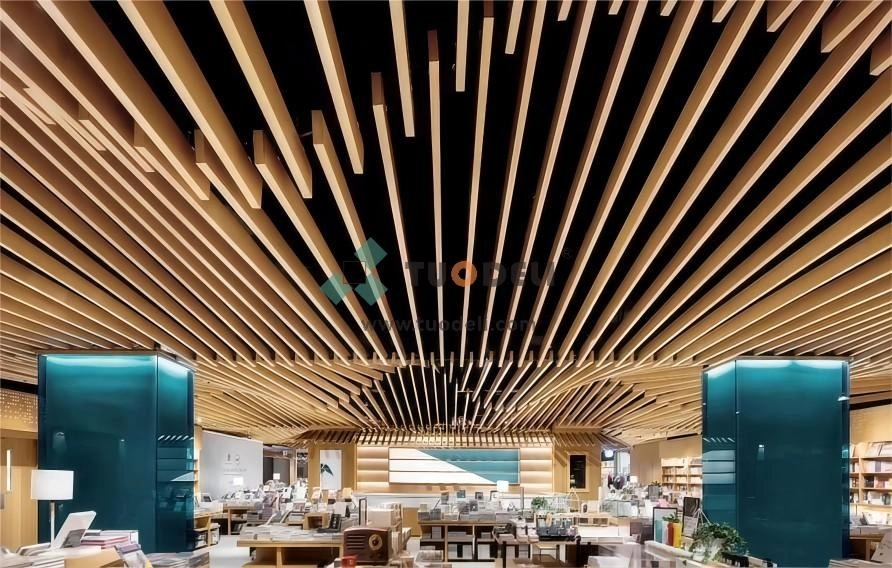
The visible baffle is only one part of the assembly. Buyers should verify the complete linear baffle ceiling system, including the carrier, suspension, connections, perimeter conditions, and the way services pass through or sit between the baffles. A system that looks coherent in a rendering may still create difficult tolerances or maintenance problems when it reaches the site.
The goal is not to demand every detail before a supplier is shortlisted. It is to establish which details are known, which are assumptions, and which will be verified through samples, drawings, or project evidence. That distinction keeps the comparison honest.
The approved project context includes offices, retail spaces, airports, and other public areas, but each setting changes the review. Traffic, access, lighting, ventilation, cleaning, appearance, and service coordination can all affect the ceiling selection. The same product family also has to be narrowed to exact dimensions, materials, surface finishes, acoustic or fire-related information where applicable, installation conditions, sample requirements, quantities, and RFQ details. Useful responses identify the exact product evidence behind each item rather than asking the buyer to assume that one catalogue description applies to every project.
Linear Baffle System Components and Suspension
Ask the supplier to identify the baffle profile, carrier or suspension arrangement, connection method, and any special components needed at corners, changes in direction, or interfaces with other ceiling types. The response should explain how the components work together and which dimensions must be fixed before fabrication.
Maintenance access deserves an early answer. If the open ceiling contains services above it, the team needs to know whether access is achieved between baffles, through removable sections, or by another planned route. One that can explain the access strategy is more useful than one that simply lists standard accessories. Readers who need the broader product context can review baffle ceiling options before the technical comparison.
Material, Finish, and Acoustic Scope
Material and finish choices affect appearance, handling, cleaning, and the way the ceiling responds to the surrounding environment. Material, coating or finish, colour direction, and sample requirements should be separated instead of presented as one unspecified “metal ceiling” package.
Acoustic performance must be treated with the same discipline. An acoustic linear baffle ceiling may rely on the open baffle arrangement, an absorptive element, a perforated surface, or a combination of those choices. The next question is which element is expected to do the acoustical work and which measurements or product evidence support that proposal. An acoustic linear baffle ceiling proposal should also state whether the expected performance depends on the baffle spacing, an added absorptive component, or the surrounding room conditions. General acoustic language is not enough when the ceiling is part of a performance target.
How Should Samples and Quality Evidence Be Reviewed?
Samples help the project team agree on what will be repeated in production. They should not be treated as decorative approvals with no connection to the specification. The sample review should identify the profile, material, finish, colour, edge condition, perforation if applicable, and the reference conditions under which the sample was made.
Quality evidence should answer a practical question: how will the supplier keep the approved result consistent after the sample is signed off? The answer may involve inspection points, production controls, packing checks, or a documented approval reference. The exact process belongs to the supplier and the project, but the buyer should know what evidence will be available before bulk production begins.
Sample Approval and Reference Conditions
Record what the approved sample represents. A colour chip is not the same as a finished panel, and a small profile sample may not show the alignment expected across a long ceiling run. The approval note should state the material, finish, profile, surface treatment, and any handling or installation assumptions that affect the final appearance.
A new approval should also be required when the material, coating system, perforation pattern, or production route changes. A different material, coating system, perforation pattern, or production route can change the result even when the drawing dimensions remain the same. That rule prevents an early sample from being treated as approval for a later substitution.
Inspection and Production Consistency
Ask where the supplier checks incoming material, formed components, coating or finish, and finished parts. On a large order, the important question is not whether inspection exists in theory; it is whether the checks produce a record that can be connected to the approved sample and production batch.
Packing and identification also belong in this review. Panels that arrive mixed, damaged, or difficult to match to the installation sequence create site delays that a low unit price will not recover. Packing and identification require an explanation of how the order will be protected and matched to the installation sequence through delivery. Buyers comparing the wider metal ceiling families can use the same evidence-based approach when another ceiling type is part of the package.
What Should Be Normalized in Supplier Quotations?
Quotations become useful only when they describe the same project. Buyers should create a comparison sheet that records the system scope, finishes, accessories, samples, packing, delivery, taxes or duties where relevant, and the assumptions that affect installation. The lowest number is not comparable if it covers a different system or leaves more work with the buyer.
This is where the shortlist becomes practical. Suppliers that can explain their assumptions are easier to compare than suppliers that provide a price with no basis. Negotiation may still follow, but it starts from a known scope rather than a guess.
Scope and Commercial Inclusions
Normalize the quotation before comparing totals. Identify whether the offer includes baffles, carriers, suspension components, perimeter trims, fasteners, sample panels, test or inspection records, packing, and technical documentation. Mark every exclusion and every item that is priced separately.
The same rule applies to the commercial basis. Quantity, measurement method, currency, payment terms, validity period, and delivery point can change the apparent price. A clear scope is not necessarily cheaper, but it gives the buyer a fair basis for the next question.
Delivery, Packing, and Installation Interfaces
A quotation should explain how the system reaches the project and where the supplier's responsibility ends. Review packing protection, bundle or carton identification, unloading assumptions, storage requirements, handling limits, and the information needed to match deliveries to the installation sequence.
Installation interfaces deserve the same attention. Setting-out dimensions, substrate conditions, suspension locations, and site measurements should be identified before work begins. For large linear baffle ceiling factory suppliers, this clarity is often more valuable than another promotional claim because it exposes the assumptions that would otherwise appear as change orders later.
Conclusion
In a large project, the best linear baffle ceiling factory supplier is the one that can turn the approved drawing into a documented, reproducible, and comparable package. Check whether the supplier can work through geometry, system interfaces, material and finish scope, sample approval, production controls, packing, delivery, and quotation assumptions without hiding uncertainty. The answer should be visible in the questions the supplier asks and the evidence it provides, not in a generic product claim.
Bring the reflected ceiling plan, dimensions, finish requirements, installation conditions, sample expectations, and target quantity into one review package. Then send the project details for technical review and compare suppliers on the same basis.
FAQs
Q1: What should be included in a linear baffle ceiling RFQ?
A1: Include the reflected ceiling plan and key elevations or sections, target dimensions, intended layout, material and finish direction, acoustic or fire-related requirements where applicable, quantity, delivery location, sample expectations, and the project conditions that affect installation. The RFQ should also ask each supplier to state exclusions and assumptions.
Q2: How should samples be compared before production?
A2: Compare the same profile, material, finish, colour, perforation, and edge condition under the project's intended lighting. Record what the approved sample represents and require a new approval if the material, coating, tooling, or production route changes.
Q3: Which quotation differences should buyers normalize?
A3: Normalize the included components, accessories, suspension, perimeter treatment, samples, inspection records, packing, delivery point, quantity basis, currency, payment terms, and installation assumptions. A quotation is only comparable when those items match.
Other News