
Which Ceiling Material Is Actually the Strongest for Commercial Use?
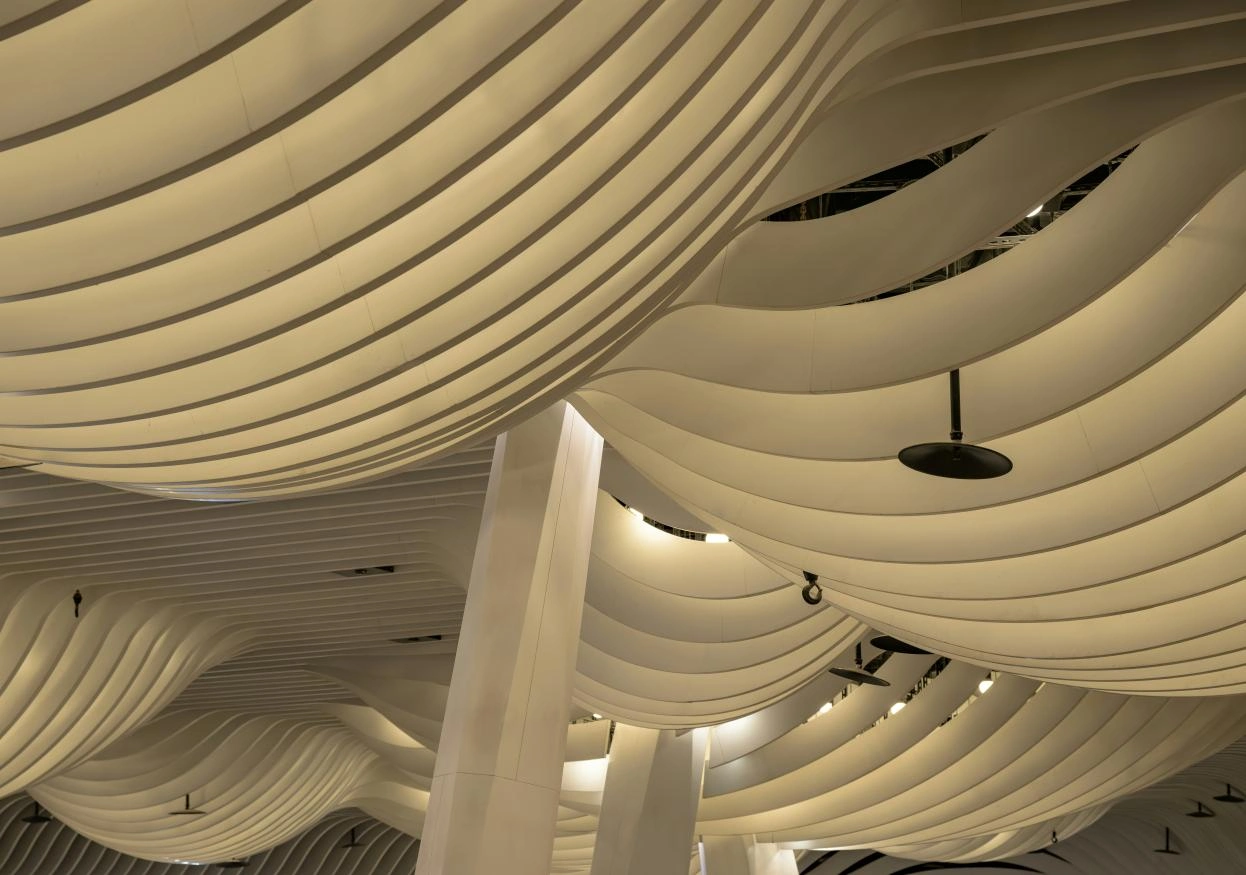
Imagine you stand in a crowded global airport at the busiest time. Crowds of passengers rush by. Luggage wheels rumble over the ground. The cooling system runs at maximum capacity. Now, glance upward. That vast area overhead does more than provide visual appeal. It must endure air force from large moving entrances. It also handles shakes from close aircraft. Plus, it complies with firm fire protection rules. All this occurs while maintaining a flawless appearance for the coming two or three decades. In advanced building design, "strength" goes beyond mere toughness under impact. It concerns how effectively a substance resists the passage of time, damp conditions, and routine use.
Selecting the strongest ceiling material is a crucial choice for every site leader or designer. If you select poorly, panels may droop within three years. Or rust marks could appear in five. For companies like TUODELI, which devoted years to refining metal arrangements, the solution rests in the basic properties of the substances.
The Core Definition of Strength in a Commercial Space
As we discuss strength in a business environment, we consider factors beyond simple firmness. A genuinely robust substance must confront four primary threats: downward pull (which causes drooping), flames, wetness, and physical strain. Common options such as mineral fiber or gypsum frequently falter in these respects. For instance, mineral fiber soaks up liquid from a dripping line. As a result, it gains weight. Eventually, it bends or drops from the framework.
Real endurance involves a covering that retains its form even amid 90% moisture levels. This explains why numerous current constructors avoid flexible substances. They require an answer that delivers a Class A flame grade. Moreover, it avoids creating spots for fungus or mold growth. Such practical dependability distinguishes a short-term patch from a lasting outlay.
Why Metal Wins the Battle of Durability
Place various substances next to each other for comparison. Then, commercial metal ceilings regularly emerge as superior. Metal avoids drying and splitting like timber. It also resists breaking apart like stucco. Be it iron or aluminum, metal delivers a firm exterior that remains perfectly level for many years. In a spacious workplace or retail center, this evenness creates an upscale, business-like atmosphere.
The move to metal reflects not merely a passing style. Rather, it addresses the steep upkeep expenses of lower-cost substances. A flexible piece may cost less initially. However, over a decade, the expense of swapping ruined or marked pieces often doubles the amount of a single metal setup.
The Advantage of Commercial Metal Ceilings Over Soft Tiles
Metal arrangements surpass mere hardness. They suit busy spots where staff often enter the area above the covering. In medical centers or research rooms, upkeep groups repeatedly shift pieces to inspect lines or cables. Flexible pieces frequently bend or gather grime in such actions. In contrast, metal layers endure handling. Workers can attach and detach them numerous times. They keep their borders intact and avoid visible marks. For demanding settings, TUODELI provides tailored tiles and ceiling systems that simplify and secure this entry.
Aluminum: The Lightweight Heavyweight of Modern Design
Of all choices, aluminum ceiling panels gain broad recognition as the top pick for effective tasks. Aluminum stands out since it combines remarkable firmness with a weight roughly 60% below that of iron. This reduced mass eases the load on the structure. It also enhances safety during placement for on-site crews.
Builders favor aluminum for its simple cutting and adjustment around intricate forms like supports or arched barriers. Yet, the modest weight does not indicate weakness. When shaped properly, aluminum manages substantial air forces. Thus, it fits well for outer undersides or underground transit points where pressure shifts occur swiftly.
Why Designers Prefer Aluminum Ceiling Panels for Large Projects
Aluminum maintains not only its structure but also its outer appearance. As a non-iron substance, it avoids typical rusting. This positions it ideally for cooking areas, washrooms, or warm regions where dampness persists. At TUODELI, our aluminum ceiling products undergo several layering steps. These ensure the hue remains bright beyond 20 years. Pair this resistance to substances with its solid build. Then, you obtain a substance that truly embodies peak robustness.
The Engineering Behind Corrosion Resistant Ceilings
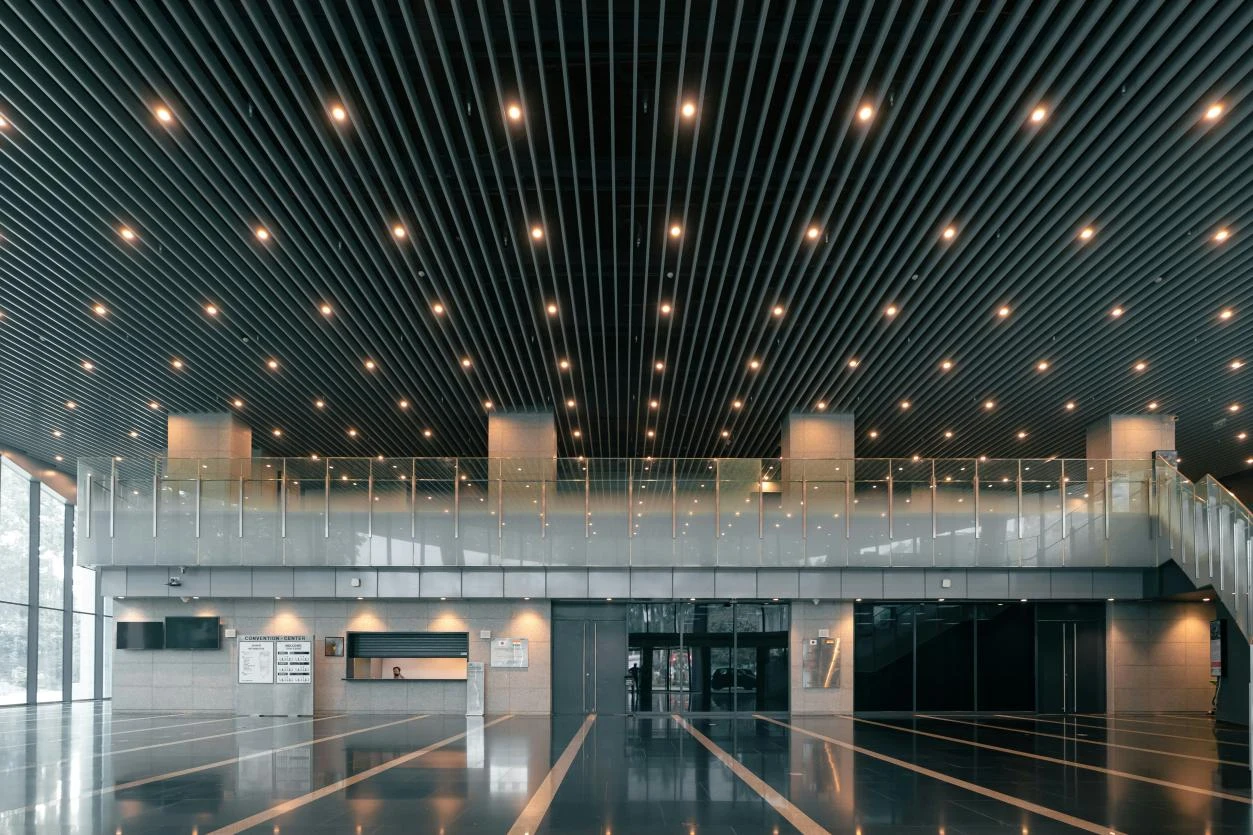
In seaside towns or factory districts, vapors carry salts and agents that erode basic construction elements. Here, corrosion resistant ceilings shift from optional to essential. Using ordinary iron in a pool zone leads to reddish decay in mere months. Only fine aluminum or processed stainless steel prevents such issues.
In these spots, robustness centers on resistance to chemicals. A layer may appear thick and weighty. Yet, if it decays, it forfeits its supportive quality. Therefore, evaluation holds great value. A reliable producer subjects their layers to a salt vapor check, typically lasting 72 hours or longer. This demonstrates endurance in tough scenarios.
Investing in Long-Term Corrosion Resistant Ceilings
Opting for an arrangement from a skilled provider means gaining assurance. For instance, TUODELI’s stainless steel decorative panels target zones needing both appeal and superior defense. These layers do more than occupy space. They shield the building's "plenum." This area conceals essential cables and conduits. By selecting a substance that defies decay, you guarantee the full covering arrangement stays firm and secure for users.
Stability Within Suspended Ceiling Systems
A covering layer proves as sturdy as its supporting frame. Thus, the layout of suspended ceiling systems forms a vital topic. A skilled arrangement employs a "grid" of primary beams and side supports. These stay even under loads from fixtures, openings, and thick fillers.
The hanging setup must also consider shifts. In quake-prone regions, the grid requires a "seismic rated" design. This includes added room for motion without layers dislodging. A frail grid may collapse. Consequently, the entire covering fails, despite strong metal pieces.
Choosing the Right Suspended Ceiling Systems for Safety
Current arrangements feature clever fastening devices that connect securely. This forms a solid network. Such methods outpace outdated "nail-up" approaches. A superior hanging setup also copes with "positive and negative wind loads." This proves crucial for open doorways where fierce winds might pull layers loose if not secured well. TUODELI emphasizes these design elements. As a result, every task aligns with area regulations and protects those inside.
Practical Benefits of Durable Ceiling Tiles
In educational buildings or bustling foyers, individuals often act carelessly. A step stool may strike the covering. Or a thrown object might contact a layer in a sports area. Durable ceiling tiles of metal endure these minor collisions without splitting or breaking. Such resistance to strikes represents a core aspect of everyday robustness.
Endurance further implies ease of cleaning. In care facilities, the covering demands washing with potent sanitizers. Flexible, absorbent pieces would absorb these agents and degrade. Metal pieces allow daily wiping with health-standard cleaners. They suffer no harm to the exterior over extended periods.
Why Maintenance Managers Love Durable Ceiling Tiles
Without concerns over liquid harm or bending, upkeep funds decrease sharply. A lasting metal piece requires no repainting every few years. It also avoids releasing particles into the atmosphere. This maintains excellent interior air standards and shortens fix lists. It offers a "place and ignore" option. Building holders can thus concentrate on operations rather than facilities.
Silence is Strength: Acoustic Ceiling Solutions
Finally, we have to talk about "acoustic strength." In an open-plan office, noise is a major problem. If a material is too hard, like solid glass or stone, it reflects sound and makes the room impossible to work in. Strong acoustic ceiling solutions use metal panels with thousands of tiny holes (perforations) to trap sound energy.
By placing a non-woven fabric or a rock wool pad behind the metal, the ceiling can absorb up to 85% or 90% of the noise that hits it. This is a different kind of strength—the strength to manage the environment and make it comfortable for humans.
Creating Productive Spaces with Acoustic Ceiling Solutions
A quiet office is a productive office. Research shows that high noise levels increase stress and lower concentration. By using perforated metal panels, you get the physical strength of aluminum with the sound-softening power of a cloud. It is the best of both worlds. Whether you are designing a concert hall or a simple conference room, these acoustic systems provide the professional finish you need.
Conclusion
When you weigh all the factors—fire safety, moisture resistance, seismic stability, and acoustic performance—it becomes clear that metal is the strongest ceiling material for any serious commercial project. While traditional options might seem cheaper at first glance, the long-term value of aluminum ceiling panels and high-quality suspended ceiling systems is unmatched. You aren't just buying a cover for your pipes; you are buying a 30-year guarantee of safety and beauty.
At TUODELI, we pride ourselves on delivering materials that architects trust for their most challenging designs. From airport terminals to high-end lobbies, our products are built to last. If you are planning your next project and want to ensure you are using the best materials available, we invite you to explore our full range of solutions.
Ready to find the perfect fit for your building? Contact us today to speak with our experts and request a custom quote or material sample. Let’s build something that stands the test of time together.
FAQs
Q: Is aluminum better than steel for high-humidity areas?
A: Yes. Aluminum is naturally corrosion resistant, making it much better for pools or coastal projects.
Q: Can commercial metal ceilings really help with office noise?
A: Absolutely. When used as part of acoustic ceiling solutions with perforations, they absorb most ambient sound.
Q: Are suspended ceiling systems safe during an earthquake?
A: Yes, provided they are seismic-rated and installed by professionals using high-quality metal grid components.


