What Drives Custom Linear Baffle Ceiling Price on Large Projects?

A custom linear baffle ceiling price is not a single market rate that can be read from a catalogue. It reflects a defined system, the geometry of the ceiling, the basis used to measure it, the finish direction, the accessories, the quantity, and the commercial terms attached to delivery. Change one of those assumptions and two quotations can describe substantially different work.
That makes price comparison a scope problem before it becomes a negotiation. Two sets of custom linear baffle ceiling prices can look close on a spreadsheet while covering different drawings, quantities, finishes, or delivery assumptions. A buyer needs to know what each supplier has priced, what remains excluded, and which project conditions could change the final number. This guide sets out the variables that most often move a custom quotation and the checks that make competing offers easier to compare.
Where the Quoted Scope Begins
Every credible price starts with a defined ceiling scope. A supplier can estimate a broad product category, but that estimate becomes useful only when the drawing, system, quantity, and commercial boundary are described in the same way. Without that foundation, a low number may simply reflect a narrower assumption.
The review inputs are equally specific: reflected ceiling plan, elevations and sections where needed, target dimensions, material and finish requirements, installation conditions, sample requirements, quantities, and RFQ details. A price comparison becomes meaningful only when those inputs match the current drawing and the approved product evidence. If one supplier prices a different drawing revision or leaves the finish direction open, the total is not yet comparable.
The quoted scope should also identify the person or trade responsible for each interface. Suspension, perimeter conditions, lighting openings, access, and site measurement can sit outside a supplier’s offer unless they are written into the scope. Those omissions may not be visible in the headline price, but they affect the total project cost.
Drawing and System Definition
Start with the reflected ceiling plan, elevations, sections, and any detail that controls baffle direction, spacing, level, or transitions. The supplier should state which drawing revision was priced and whether the price assumes a standard layout or a custom configuration. A quote tied to an old drawing is not comparable with one prepared from the current issue.
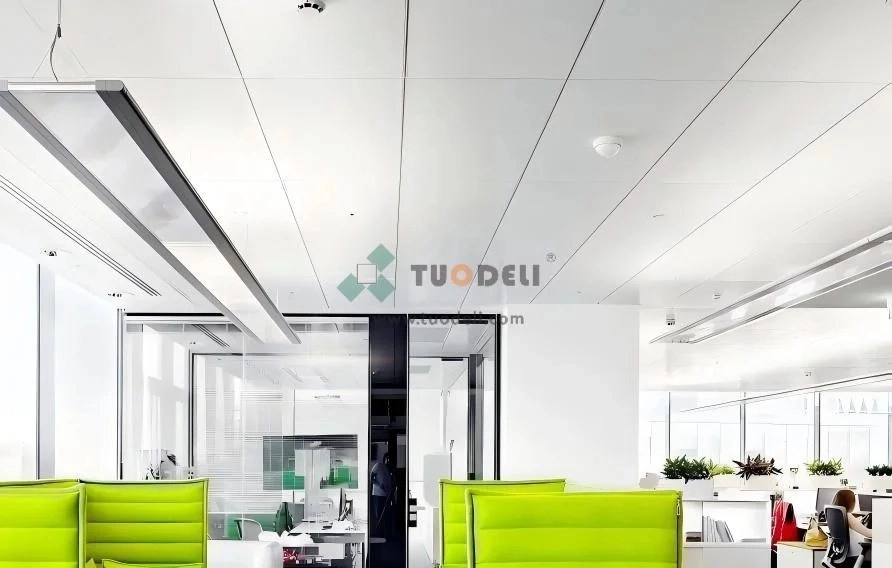
The proposed system should also be named. A linear baffle assembly includes the visible baffle, the carrier or suspension arrangement, connectors, and perimeter treatment. When the supplier identifies those components, the buyer can see whether two offers include the same system or merely use the same product label.
Quantity and Measurement Basis
Quantity is one of the easiest places for a quotation comparison to go wrong. A project may be measured by area, by linear run, by panel count, or by a combination of those units. Each supplier should receive the same basis, and the comparison should record whether waste, cutting, or spare material is included.
This is especially important when one offer uses a custom linear baffle ceiling price per square foot and another uses a custom linear baffle ceiling price per foot. The two figures may look comparable in a spreadsheet, but they represent different assumptions about width, spacing, coverage, and the quantity being supplied. Normalize the basis before comparing totals.
Specification Choices That Move the Price

Specification is the next major price driver. A generic “metal ceiling” description can hide differences in material, thickness, surface treatment, colour, perforation, acoustic build-up, and the expected level of finish. Buyers do not need to over-specify every item, but the quotation should make the important choices visible.
The ceiling category is broader than the visible baffle. TUODELI lists tiles, baffles, strips, open-cell, expanded, and special ceiling families in its metal ceiling portfolio. Its baffle page describes suspended linear metal panels in different sizes, finishes, and configurations, with an open structure that supports acoustic performance, air circulation, lighting integration, and maintenance access. For a quotation, those facts explain why the buyer must identify the exact system and finish rather than allowing the offer to refer to a generic ceiling category.
Custom work also creates fabrication and handling implications. Different profiles, longer components, tighter tolerances, or complex interfaces may change tooling, processing, packing, and the amount of material required. Those effects should be discussed as scope variables rather than treated as automatic markups.
Profile, Material, and Finish
The profile determines how the baffle looks and how it fits the suspension system. Material and finish affect the required surface preparation, coating route, cleaning expectations, and handling care. A buyer comparing custom linear baffle ceiling prices should ask each supplier to state the profile, base material, finish system, colour direction, and any performance-related documentation that applies to the proposed product.
The official TUODELI baffle page describes metal baffle ceiling systems as suspended linear metal panels available in different sizes, finishes, and configurations. That confirms useful product-family breadth, but it does not mean every option is interchangeable. The exact size, finish, and system still need to be confirmed against the project requirement and the selected product evidence.
Accessories, Suspension, and Acoustic Build-Up
Accessories often explain a large part of the difference between two custom quotations. Carriers, suspension components, perimeter trims, fasteners, acoustic elements, and special connections may be included in one offer and treated as separate items in another. A component-level scope should be requested rather than relying on the total price.
Acoustic scope deserves a separate line. An open baffle arrangement can contribute to acoustic performance, but the result depends on the room, spacing, absorptive elements, and the surrounding construction. When a supplier proposes an acoustic linear baffle ceiling, the quotation should identify the proposed acoustic build-up and the evidence behind any performance claim. Product-family descriptions do not replace project-specific review.
A Practical Quotation Comparison
Once the system and specification are defined, the buyer can compare prices without guessing what each number represents. A useful comparison sheet separates the product scope, accessories, samples, inspection records, packing, delivery, payment terms, and installation assumptions. The goal is not to make every supplier identical; it is to reveal where the offers genuinely differ.
This approach also protects the project schedule. A supplier that includes clearer documentation and packing controls may not be the lowest initial number, but it may reduce site delays, replacement risk, and change-order friction. The comparison should therefore connect price to the work the supplier has actually agreed to perform.
Scope Inclusions and Exclusions
List every inclusion and exclusion in the same order for each supplier. Confirm whether baffles, carriers, suspension, perimeter trim, fasteners, sample panels, inspection records, technical documentation, and spare material are included. Mark any item that is provisional, subject to a minimum quantity, or priced only after a drawing revision.
The same discipline applies to custom work. If a supplier prices a standard layout but the project later introduces curves, perforations, or special interfaces, the buyer needs to know how that change will be handled. A clear exclusion list is more useful than an artificially complete-looking total.
Delivery, Payment, and Project Risk
Delivery and commercial terms can change the effective price even when the product scope matches. Review the delivery point, packing protection, unloading assumptions, storage requirements, payment milestones, currency, validity period, and the consequences of a schedule change. Each item should be attached to one named responsibility.
Some buyers begin with the question where to buy custom curved baffle ceilings when a design introduces a radius or special profile. The same logic applies there: the question where to buy custom curved baffle ceilings is answered properly only when the supplier can price the geometry, sample, delivery, and installation interfaces on a comparable basis.
Before You Accept the Custom Price
Acceptance should wait until the assumptions behind the price are clear. The approved sample, production route, inspection expectations, packing method, and change-control process all affect whether the quoted amount remains meaningful during execution. A quotation that is silent on those points leaves too much to interpretation.
The final review is also a communication check. The project team should be able to explain what the price covers, which conditions could change it, and what information the supplier still needs. If that explanation is not possible, the quotation is not ready for a purchase decision.
Sample and Production Assumptions
Confirm what the price assumes about the approved sample. The sample should represent the profile, material, finish, colour, edge condition, and any perforation or acoustic element that will be repeated in production. A change to the material, coating system, tooling, or production route should trigger a new approval and, when necessary, a revised commercial review.
Production assumptions should also be documented. Price documentation should state whether the quotation includes a specific inspection regime, packing standard, identification method, or replacement allowance. These requirements belong in the quotation or its supporting documents, not in an informal promise made after the order.
Change Control and Final Commercial Scope
Ask how changes will be priced after the quotation is accepted. Drawing revisions, quantity changes, finish changes, delivery rescheduling, and site measurement differences can all affect the final amount. A clear change-control process protects both sides and makes the original quotation easier to interpret.
The final commercial scope should identify the approved drawing revision, product system, quantity basis, included accessories, delivery terms, and any assumptions that require confirmation. That record becomes the reference point for purchase approval and later comparison. Readers who need the wider product context can review baffle ceiling options, while buyers comparing adjacent ceiling categories can compare metal ceiling families and review the manufacturer scope before finalizing the package.
Conclusion
Custom price comparison works only when the projects being compared are the same. Define the drawing and system, agree on the measurement basis, expose the material and finish choices, list accessories and exclusions, and document delivery and change assumptions before accepting a total. The lowest number is not meaningful if it leaves more work, risk, or uncertainty with the buyer.
Prepare one RFQ package with the current drawing, dimensions, finish direction, system scope, quantity basis, delivery conditions, and sample requirements. Then send the project details for technical review and compare every custom linear baffle ceiling price against that common scope.
FAQs
Q1: What information is needed for a custom linear baffle ceiling quotation?
A1: Provide the current reflected ceiling plan, elevations or sections where relevant, baffle direction and layout, target dimensions, material and finish requirements, quantity basis, delivery location, sample expectations, and installation conditions. Ask each supplier to state exclusions and assumptions.
Q2: Does a lower price always mean a better supplier?
A2: No. A lower number may exclude suspension, accessories, packing, samples, inspection records, delivery, or installation support. Compare the included scope and the treatment of project risk before judging the price.
Q3: How should buyers compare price per square foot and price per foot?
A3: Use one measurement basis across all offers and document how coverage, spacing, waste, and quantity are calculated. A custom linear baffle ceiling price per square foot and a custom linear baffle ceiling price per foot may describe different scopes, so the buyer should normalize them before comparing the totals.
Other News