Oil Canning or Tolerance Failure? Diagnosing Metal Panel Waviness
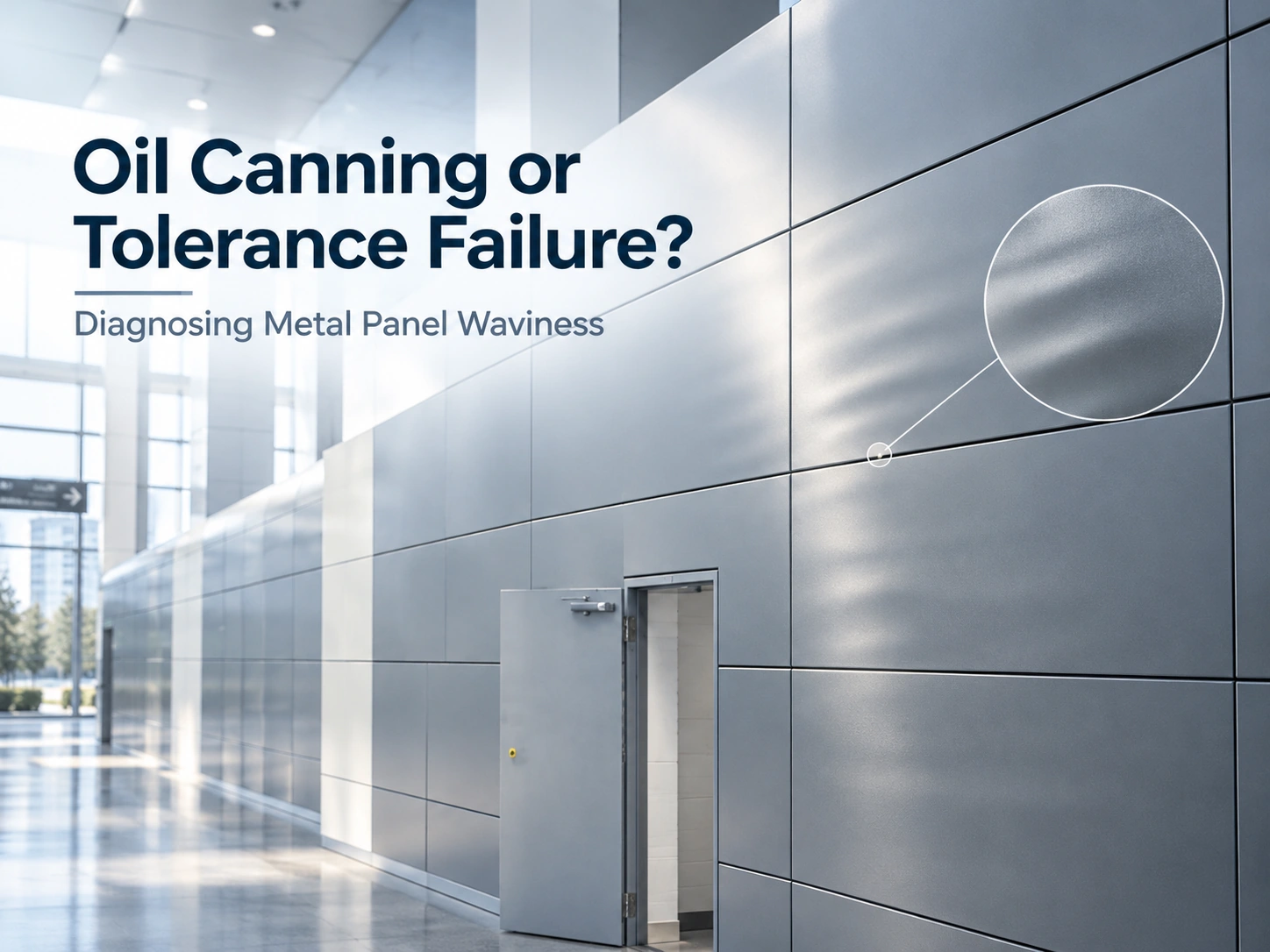
A wavy metal panel is a visible symptom, not a diagnosis. The same appearance can come from an uneven substrate, an over-tightened fastener, thermal movement, handling damage or a panel design that is too flexible for the span. If the project treats every wave as an oil-canning defect, it may repair the wrong thing or replace panels that will behave the same way again. TUODELI produces metal wall and facade panel systems, including single-skin and composite wall panels. When a metal panel looks wavy, the project needs to observe the pattern, separate the causes and then decide the next step.
Diagnosing waviness on single skin wall panels and composite wall panels starts with the observed pattern and the conditions that produced it. The checks below separate substrate, fixing, movement and handling evidence before repair or replacement.
Oil Canning Is a Symptom, Not a Single Cause
What the wave pattern tells you
The location and direction of the wave provide the first clues. A wave that follows the fastener line may point to over-tightening or a support that is not continuous. A wave that appears across the middle of a panel may indicate an uneven substrate, a panel that is too thin for the span or a temperature-related movement. A wave that appears after installation may be caused by thermal movement or by a change in the support condition. The pattern should be recorded before any repair is attempted. The observation angle also matters. A wave that is obvious under raking light may be less visible in diffuse light, and a wave that looks severe in a photograph may be within the agreed visual acceptance range. Record the light direction and viewing distance with the photograph.
What it cannot tell you
The wave alone does not prove that the panel material is defective. Two panels with the same finish and thickness can behave differently on different substrates or with different fixing methods. Likewise, a flat panel on a workbench may become wavy once it is fixed to a substrate that is not level. The diagnosis must include the support, the fixing, the temperature and the handling history, not only the panel surface.
Separate the Main Causes
Substrate and support alignment
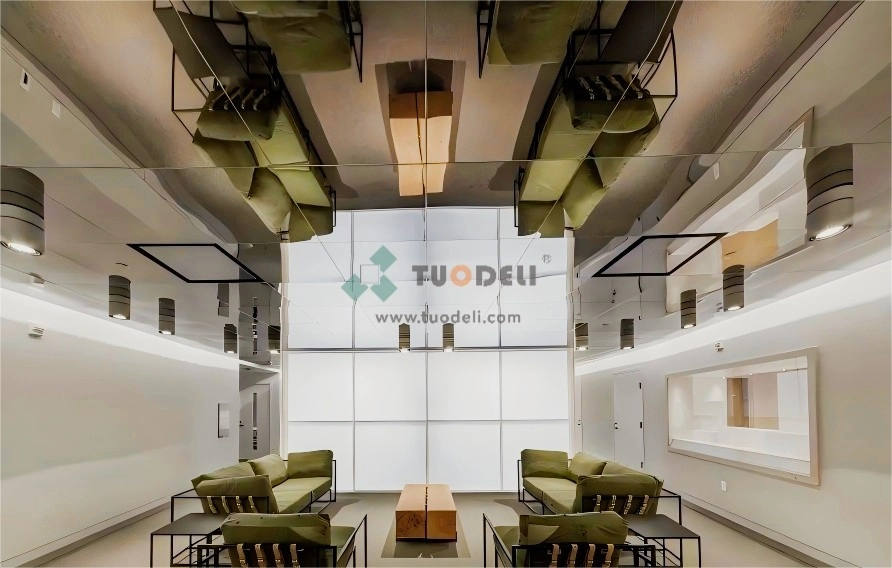
A metal panel follows the surface beneath it. If the substrate is uneven, the panel may be forced into a wave as it is fixed. The same is true if the support spacing is irregular or if the panel is pulled to a support that is out of plane. Before blaming the panel, check the substrate and support alignment with a straightedge, a level and a consistent measuring method. The inspection should cover the whole panel area, not only the visible wave. The alignment check should use the same reference over the whole panel area. A straightedge placed only on the visible wave may miss a support or substrate deviation that continues beyond it. If shims are used, they need to be continuous, fixed and compatible with the panel system. A local correction that creates a new high point can move the wave rather than remove it.
Fastening, thermal movement and handling
Over-tightening can distort the panel around the fastener and create a wave that spreads across the flat area. Under-tightening or a missing fastener can leave the panel unsupported and free to move. Thermal movement can also cause the panel to buckle if the fixing system does not allow expansion and contraction. Handling and storage matter as well: a panel that was bent, twisted or stored on an uneven surface may not recover when it is installed. Handling also affects the diagnosis. A panel that was stored flat, lifted with a spreader and installed without point loading has a different history from one that was dragged, bent or stacked on an uneven surface. Record how the panel was stored and handled before installation. If several panels from the same pack show the same wave, the review should include the pack condition and the support surface as well as the fixing torque.
Decide the Next Step
Repair, replace or investigate further
The next step depends on the cause. A localised wave caused by an over-tightened fastener may be repairable if the panel and finish are not damaged. A wave caused by an uneven substrate may require the substrate to be corrected before the panel is reinstalled. A repeated pattern across multiple panels may indicate a design or tolerance issue that requires a broader review. Replacement should be considered when the panel is permanently deformed, the finish is damaged or the fixing condition cannot be corrected. A staged repair can help identify the cause. If correcting a local fastener or support removes the wave, the problem was local. If the wave returns after the correction, the substrate or panel design should be investigated further. Replacement should follow the diagnosis, not precede it.
What to record before intervention
Record the panel location, orientation, span, support spacing, fastener type and torque, substrate condition, temperature and time of observation. Photographs should include a scale and a reference to the surrounding panels. If the panel is removed, record the condition of the substrate and the fixing points. This evidence allows the project to compare the failed panel with a satisfactory one and to decide whether the cause is local or systemic.
Conclusion
Oil canning is a visual symptom that can have several causes. The useful question is not "is this oil canning?" but "what condition allowed the panel to deform?" Substrate alignment, fastener torque, thermal movement, handling and panel design all leave different evidence. Diagnosing the cause before repair prevents the project from replacing panels without correcting the condition that caused the wave. The diagnosis improves when the observation record is complete: share the panel photographs, substrate condition and fixing details before ordering replacement panels.
FAQs
Q1: Can oil canning be prevented completely?
A1: No single measure can guarantee that a metal panel will never show waviness. The risk can be reduced by using an appropriate panel and support system, aligning the substrate, following the fixing requirements and allowing for thermal movement. Acceptable appearance needs definition before installation.
Q2: Does a thicker panel always solve oil canning?
A2: A thicker panel may be more resistant to local deformation, but it does not correct an uneven substrate, an incorrect fixing condition or a movement problem. The cause must be identified before changing the panel specification.
Q3: When should a wavy panel be replaced?
A3: Replacement is usually considered when the panel is permanently deformed, the finish is damaged or the fixing condition cannot be corrected without affecting the panel. If the cause is substrate or installation related, correcting that condition should come first.
Other News