Metal Ceiling Cleaning Maintenance: How Should Facilities Plan It?

img.Metal Ceiling Cleaning Maintenance: How Should Facilities Plan It?.webp
Cleaning a metal ceiling usually becomes urgent when the surface looks dull, streaked, or dusty. The harder decision is what the installed ceiling can tolerate. Panel type, finish, perforation, acoustic components, and the services above the ceiling can each rule out a method that worked elsewhere. A useful metal ceiling cleaning maintenance plan therefore treats the surface, the contamination, the access route, and the acceptance check as one operational problem.
That plan has to fit the facility rather than a generic cleaning list. The document should tell the team where to begin, what must be protected, which product information controls the method, and how each area will be released back to normal use.
What Defines the Metal Ceiling Cleaning Scope?
img.Metal Ceiling and Wall Systems for Data Center Application.webp
A cleaning scope should be written before a contractor quotes labour or prepares equipment. Start with the ceiling record and the observed condition, then define the areas included, the reason for cleaning, and the result the facility expects.
Ceiling Family, Material, and Finish
TUODELI lists tiles, baffles, strips, open-cell, expanded, and special ceilings as separate product families. The metal ceiling product range identifies these families separately, so cleaning method and finish protection should be matched to the selected system rather than applied as one universal procedure.
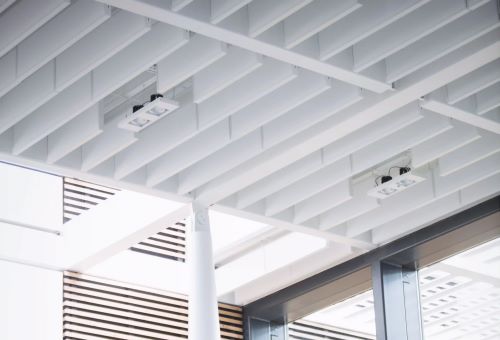
A metal ceiling tile system often presents a more continuous surface, while baffles and open-cell ceilings create gaps, edges, and inaccessible pockets. A perforated or acoustic face can hold dust differently from a plain panel. Those features should be identified before deciding whether dry removal, a controlled wet method, or local treatment is suitable.
Material and finish matter as much as geometry. The approved product record should define the base material, coating or finish type, and any cleaning restriction before work begins. Aluminium, galvanized steel, and stainless steel can require different cleaning and drying assumptions. Plain and perforated faces, powder-coated and anodized finishes, and acoustic or corrosion-related conditions should be verified for the exact ceiling system. A colour or coating sample may help the review, but it does not prove that every cleaner or abrasive tool is compatible. A written statement should name the approved material and finish and identify any surface that cannot be cleaned with the proposed product. Where the exact finish is unknown, request product confirmation before testing a cleaner. This confirmation should precede the first cleaning pass. Each method statement should therefore identify the finish, the cleaning product family, and the protection or trial needed before full application.
Panel records should also capture the type, finish direction, joint arrangement, removable sections, and any previous repairs. These details prevent the cleaning team from treating a replacement panel or repaired edge exactly like the surrounding surface.
Contamination, Environment, and Cleaning Frequency
Not all dust is the same. Construction residue, cooking deposits, exhaust films, water marks, fibrous dust, and ordinary airborne soil can require different removal methods. The environment affects the task as well: moisture, coastal air, industrial exhaust, food preparation, and high-traffic areas can change how often cleaning is needed and how quickly contamination returns.
Office, education, healthcare, entertainment, stadium, transportation, and commercial settings can impose different access and cleaning schedules. Those differences should be reflected in zones, protection, and maintenance frequency rather than reduced to a single calendar interval. Healthcare and education areas may demand tighter control of disturbance and residue, while entertainment, stadium, and transport areas may require work windows that fit occupancy. Those conditions should shape protection, access, and completion checks.
The baseline should describe what is visible and where it occurs. If the same area becomes soiled repeatedly, the maintenance plan should identify the source or environmental condition before increasing the cleaning frequency.
Which Cleaning Method Fits the Installed System?
img.Metal Ceiling Panels and Services in Commercial Interior.webp
Method selection is a compatibility decision. The ceiling material, finish, perforation, acoustic components, services above the ceiling, and surrounding finishes all limit what can be used.
Dry, Wet, and Localized Cleaning Approaches
Dry methods are often useful for loose dust because they reduce the amount of moisture introduced near the ceiling. Soft brushes, vacuum attachments, or low-pressure tools may be suitable when the ceiling construction and finish allow them. The equipment still needs to be controlled so it does not scratch the face, lift edge details, or disturb services.
Wet cleaning can remove films and sticky deposits, but it introduces water, cleaning agents, and drying requirements. The team should confirm drainage, containment, protection below, and the time needed to dry the ceiling and surrounding area. A wet method is not automatically stronger or better; it is suitable only when the system and site can tolerate it.
Localized cleaning is useful when the problem is limited to fingerprints, marks, or a small area of contamination. A trial on a concealed or agreed sample area can reveal whether the method changes gloss, colour, texture, coating, or joint appearance before it is used across the ceiling.
Large exposed surfaces, including agricultural or industrial ceilings, add another constraint: access may cover a wide area, and washed deposits must be contained rather than allowed to spread onto equipment or occupants. Method selection should be defined by area and access condition, not by a single cleaning recipe.
Cleaning Agents, Equipment, and Finish Protection
Cleaning agents should be selected from the product information and project requirements for the exact ceiling system. Mixing chemicals to make a stronger solution is not a safe substitute for confirming compatibility. Abrasive pads, aggressive brushing, pressure washing, and unapproved solvents can damage a finish even when the visible result appears clean.
This statement should also name the cleaner or cleaning family, dilution or application conditions, dwell time, rinse requirement, tools, and drying check. Where the ceiling is accessible by panel removal, the team should also protect services above it and avoid disturbing acoustic backing, insulation, wiring, or fire-related components.
Fireproof, fire-rated, acoustic, corrosion-resistant, sustainable, and LEED/WELL language should remain tied to the product or project evidence that supports it. Cleaning records should not be used to imply performance that the installed system has not verified. If a certificate, test report, or project specification is relevant to maintenance, keep the cleaning record tied to the exact tested or specified scope. Do not extend a product or system statement to a different ceiling assembly.
A small trial area is valuable when the finish is visible, textured, perforated, or previously repaired. The trial should be inspected under normal lighting and recorded with the approved method. If it fails, the method changes before the main work begins.
How Should Access and Facility Operations Be Planned?
Cleaning a ceiling is also a building-operations task. Access equipment, protection, work zones, and shutdown windows can determine whether the work is practical even when the cleaning method is technically suitable.
Access, Protection, and Occupied-Building Controls
The access plan should identify how crews will reach the full cleaning area, how they will move equipment into and out of the building, and how occupied spaces will remain protected. Floor and furniture protection, containment, signage, and exclusion zones may be needed even when the cleaning method uses little water.
Work at height, removal of ceiling components, and movement above occupied areas should be planned by competent personnel under the project's safety controls. Before work starts, the facility team should confirm which ceiling panels or components may be removed, which must remain fixed, and where maintenance access must be restored at the end of each shift.
Healthcare, education, and public-facing areas may need a higher level of protection and communication. For relevant ceiling requirements in those settings, the project team can review a metal ceiling tile system alongside its own building requirements and approved maintenance documents.
Zones, Scheduling, and Responsibility
The most manageable cleaning plan divides the ceiling into zones. Each zone should have a sequence, access route, protection boundary, start condition, completion condition, and handover point. This gives the facility team a way to release occupied spaces progressively instead of closing the whole building without need.
Responsibility must be explicit. Access and completion responsibilities may be divided: the facility can isolate services, move furniture, supervise occupants, or verify completion, while the contractor supplies labour, equipment, cleaning agents, and records. The project designer or ceiling supplier may need to clarify product and finish restrictions when the installed system is not fully documented.
Scheduling should include preparation, cleaning, drying where relevant, inspection, and reinstatement. Cleaning that finishes just before the space reopens can leave wet surfaces, displaced panels, or unprotected equipment. The handover point should confirm that the zone is clean, complete, and ready for use.
How Should Cleaning Be Inspected and Documented?
Inspection is the link between the cleaning method and the next maintenance cycle. It protects the facility from paying twice for the same problem and gives the team a record of what the installed ceiling can tolerate.
Pre-Cleaning Inspection and Cleaning Verification
Before cleaning, record the general condition of the ceiling, visible contamination, damaged or missing components, previous repairs, and areas that cannot be reached. Photographs, marked drawings, or a panel schedule can help identify the exact locations without relying on memory.
After cleaning, verify the agreed result using the same locations and lighting conditions. Look for remaining deposits, streaks, water marks, coating changes, distorted panels, disturbed joints, and displaced components. The inspection should distinguish a cleaning defect from an existing condition that was present before work began.
Acceptance criteria should be practical. “Clean” can mean different things in a food facility, office, transport building, or healthcare space. The plan should define what the facility expects, how it will be checked, and who can approve an exception before the area reopens.
Recurring Maintenance Records and Follow-Up
The maintenance record should connect the date, area, method, products or cleaning family used, access method, inspection result, and any exception. The record should also identify follow-up work such as a damaged panel review, a recurring deposit investigation, or a change in cleaning frequency.
A recurring record helps the facility compare zones and avoid repeating an unsuitable method. It can also show when cleaning is no longer the right response and the ceiling needs repair, replacement, or a change in the surrounding environment.
A commercial project review can include drawings, sections, panel schedules, dimensions, material and finish requirements, installation conditions, sample needs, quantities, and RFQ details. For cleaning, those same records establish the ceiling layout, access constraints, and responsibility boundaries. The maintenance plan should carry that information forward so a later contractor does not have to reconstruct it from the visible ceiling alone.
Conclusion
Do not choose the cleaning method before the installed system and the expected result are clear. Start with the exact ceiling record, identify the contamination and access constraints, and reject any cleaner or tool that has not been confirmed for the finish. Once the method is approved, test it in an agreed area, protect the surrounding works, and release the ceiling only after the inspection result is accepted. Keep the maintenance record short enough to use again: what was cleaned, how it was cleaned, what was found, and what needs attention next. Review that record with the approved drawings and product information before the next cycle begins.
FAQs
Q1: Can one cleaning agent be used across a mixed ceiling installation?
A1: No single agent should be assumed to suit every panel, coating, perforation pattern, or acoustic assembly. Confirm the finish and surrounding components by area, and use a trial where the cleaner’s compatibility has not already been established.
Q2: When should a facility reject a trial cleaning area?
A2: Reject the trial if it changes colour, gloss, texture, edge condition, joint appearance, or the surrounding finish, or if it leaves residue that cannot be removed safely. Revise the method before work spreads beyond the test area.
Q3: Who should approve a partially accessible ceiling after cleaning?
A3: The facility and contractor should agree which areas are complete, which are inaccessible, and who accepts the exception. The record should identify the inaccessible zone, the reason, the temporary condition, and the follow-up needed before the next cleaning cycle.
Other News