Mesh Ceiling Panels for Public Walkways: What Should Buyers Check?

Public walkways are not quiet decorative areas. They carry constant foot traffic, signage, lighting, fire-service equipment, air movement, cleaning work, and sometimes exposed technical systems above the ceiling. For buyers and contractors, the ceiling choice has to look clean, but it also has to leave enough flexibility for maintenance and building services.
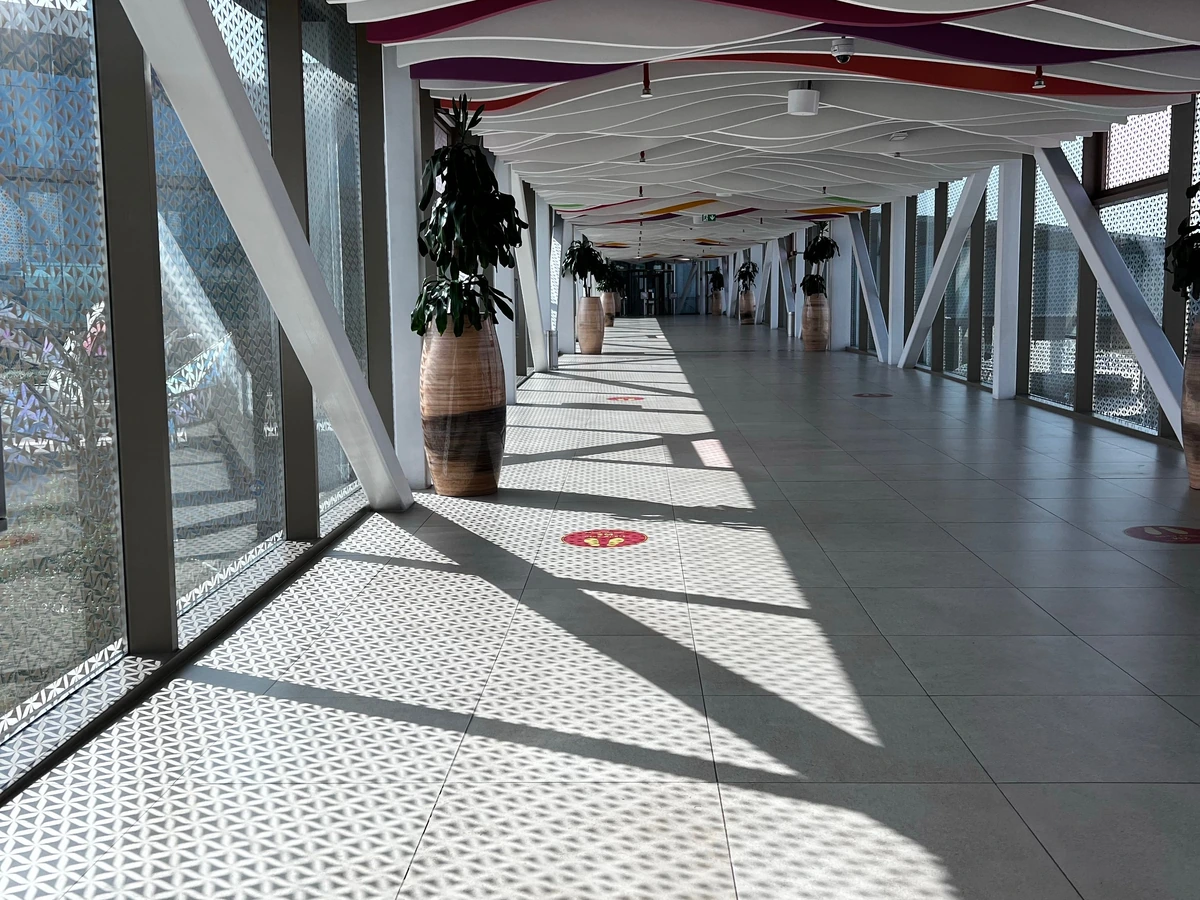
That is why a mesh ceiling can be a practical choice for public walkways, transport corridors, shopping center passages, and semi-open commercial circulation areas. Compared with a closed flat ceiling, mesh ceiling panels can keep the overhead space visually lighter while still giving the project a finished metal surface. The open pattern can also help designers manage depth, shadow, and service visibility without making the walkway feel heavy.
Still, buyers should not order ceiling wire mesh only because it looks open and modern. Public walkway ceilings need careful review of mesh pattern, panel size, edge finish, suspension method, lighting coordination, fire-service layout, cleaning needs, and long-term access. If these details are not confirmed before production, even good-looking mesh ceiling tiles can create problems during installation or maintenance.
Why Do Public Walkways Need A More Open Ceiling Choice?
Public walkways often sit between different functional zones. A shopping center corridor may connect retail stores, escalators, and service doors. A transport passage may need wayfinding, CCTV, speakers, sprinklers, and air outlets. A commercial building walkway may require a ceiling that looks finished but still allows access to pipes, cables, and lighting systems.
A closed ceiling can make the area look clean, but it may also hide too much and make later inspection more difficult. An exposed ceiling can be practical, but it may look unfinished in a branded commercial project. A mesh ceiling sits between these two choices. It can create a designed surface while keeping some openness above.
Open Structure Helps With Visual Lightness
A long public walkway can feel narrow or heavy when the ceiling is too closed. Ceiling mesh panels create a lighter overhead layer because the open pattern lets the eye sense depth above the visible surface. This can help wide corridors, semi-open passages, and retail circulation areas feel less compressed.
The effect depends on the mesh size, panel direction, ceiling height, and lighting. A dense mesh may look more solid. A wider opening may feel lighter but may reveal more services above. Buyers should review a real sample, not just a catalog photo, because the same metal mesh ceiling can look very different under different lighting.
Public Areas Need Easier Maintenance Planning
Lighting, speakers, cameras, sprinklers, smoke detectors, and signage may all need future access. In a public walkway, maintenance teams often work outside business hours, and difficult access can increase service time. Ceiling wire mesh can help when the project needs a more open ceiling surface, but access planning still has to be defined.
Buyers should confirm whether panels are removable, how they are fixed, and whether maintenance zones are marked in the reflected ceiling plan. If the ceiling mesh panels cannot be removed easily, the open look alone will not solve maintenance problems.
What Should Buyers Confirm Before Choosing Ceiling Mesh Panels?
Before selecting ceiling mesh panels, buyers should check the walkway’s function, ceiling height, service layout, and expected maintenance routine. A walkway in a luxury mall, a station passage, and a hospital corridor may all use metal ceilings, but they do not have the same performance needs.
For projects considering expanded ceilings, the buyer should confirm whether the ceiling is mainly used for visual openness, service access, airflow, lighting effect, or a combination of these requirements. This helps the supplier recommend a more realistic panel direction and installation method.
Mesh Pattern And Opening Size Should Match The Space
The opening size controls how much of the ceiling void is visible. If the openings are too large, pipes and cables may become too obvious. If the openings are too small, the ceiling may lose the light, open character that made mesh ceiling panels attractive in the first place.
A good specification should define mesh pattern, panel size, direction, and visual target. For ceiling wire mesh, buyers should also confirm whether the pattern creates a strong directional look. In long walkways, the direction of the mesh can change how people read the space.
Mesh ceiling tiles may be more suitable when the project needs modular installation and easier replacement. Larger ceiling mesh panels may suit broader walkway zones, but they need careful review of handling, flatness, packaging, and site access.
Ceiling Height Changes The Final Appearance
A mesh ceiling installed at a low height will be seen in more detail. In that case, edge quality, finish consistency, and pattern alignment become very important. A mesh ceiling installed higher above a wide walkway may be judged more by rhythm, shadow, and lighting effect.
Buyers should not select ceiling wire mesh from a close-up photo only. They should check how it looks from normal walking distance. For large public projects, a small mock-up can help the owner, contractor, and supplier confirm whether the opening ratio and finish work well in the actual space.
How Should Mesh Ceiling Tiles Work With Lighting And Services?
Lighting and services are usually the real test of a public walkway ceiling. A ceiling may look good in a sample, but the final project also needs lights, emergency systems, speakers, cameras, air movement, signage, and sometimes inspection access. Mesh ceiling tiles can support these needs when the layout is planned early.
The mistake is treating the ceiling as a finish layer after all service positions have already been fixed. For public walkways, the ceiling supplier and MEP team should coordinate before production begins. Otherwise, the installer may need to cut panels on site or place fixtures in awkward positions.
Lighting Should Use The Mesh Pattern Instead Of Fighting It
Mesh can create shadow and texture. That is useful, but it also means lighting needs to be tested. Downlights, linear lights, wall washers, and indirect lighting can all behave differently behind or below ceiling mesh panels.
If lighting is placed above the mesh ceiling, buyers should confirm whether the light output and maintenance access are acceptable. If lighting is placed below or within the ceiling plane, the panel edges and fixture openings should be coordinated. A random fixture layout can break the clean rhythm of mesh ceiling tiles.
For public walkways, lighting should also support safety and navigation. The ceiling design should not create dark patches, glare, or confusing shadows in areas where people move quickly.
Fire-Service And Airflow Positions Need Early Coordination
Sprinklers, smoke detectors, air outlets, and speakers should not be added after the ceiling has been ordered. Ceiling wire mesh may look open, but that does not mean every service item can be placed anywhere. Local project requirements, service clearance, and installation rules still need review.
Contractors should confirm which services sit above the mesh and which need to pass through the panel surface. If service items must be visible, the layout should make them look intentional. If they are hidden above the mesh, the buyer should confirm whether the opening size allows proper function and inspection.
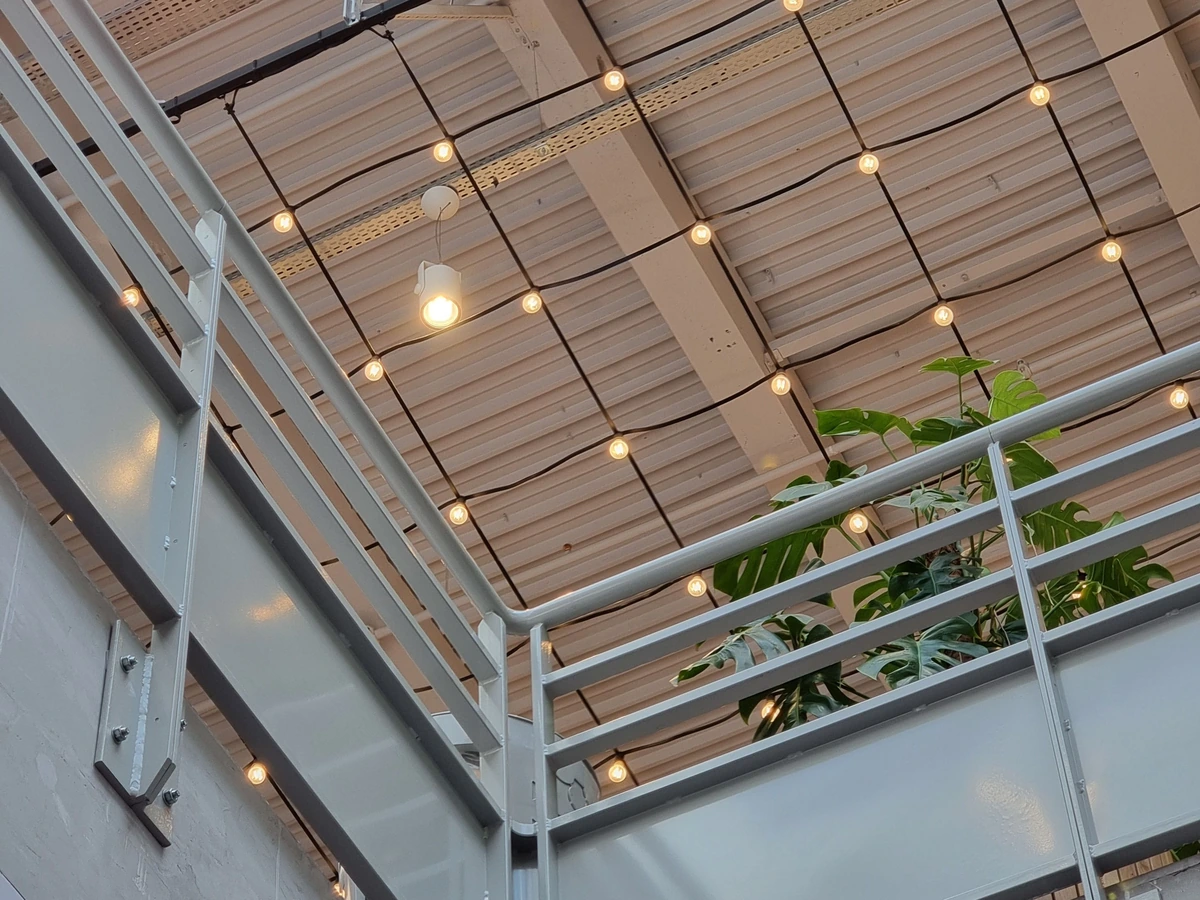
What Should Contractors Include In The RFQ?
A clear RFQ helps avoid weak quotations. If the buyer only asks for “mesh ceiling,” suppliers may quote different materials, panel sizes, finishes, accessories, and suspension systems. That makes price comparison difficult and increases the risk of missing parts during installation.
A better RFQ should describe the ceiling as a system. The buyer should include drawings, ceiling area, height, panel direction, preferred pattern, finish reference, service layout, and access requirements.
RFQ Item | Why It Matters | What Buyers Should Confirm |
Mesh pattern | Controls openness, visibility, and design rhythm | Opening size, direction, and visual target |
Panel size | Affects handling, flatness, and replacement | Module size, edge detail, and packaging |
Finish | Changes reflection, cleaning, and appearance | Color sample, coating, and batch consistency |
Suspension system | Decides installation speed and access | Carrier, clips, trims, and removable zones |
Service layout | Reduces site cutting and rework | Lights, sprinklers, speakers, CCTV, air outlets |
Delivery plan | Protects panels during phased projects | Area labels, sequence, carton marking |
This table is useful when buyers compare mesh ceiling tiles with other metal ceiling systems. The right answer may not be one ceiling type for every zone. Public walkways may use ceiling mesh panels for open areas, while closed rooms or service-heavy spaces may need another ceiling format.
For zones that need a gridded open look rather than mesh texture, open cell ceilings may also be worth comparing. For areas that need removable solid panels and stronger acoustic treatment, metal ceiling tiles may fit better. The comparison should be based on site function, not only appearance.
How Can Buyers Reduce Installation Risk On Public Walkway Projects?
Public walkway projects often have limited installation windows. Work may need to happen at night, during phased closures, or around tenant operations. A ceiling system that is not clearly prepared can slow the whole schedule.
Ceiling wire mesh can be efficient when panel sizes, accessories, and installation details are confirmed before delivery. But if the project waits until site work to solve panel direction, trim details, and access points, installation teams may face repeated adjustments.
Mock-Ups Help Confirm The Real Visual Effect
A mock-up is useful for mesh ceiling projects because drawings cannot fully show transparency, shadow, and service visibility. Buyers should review the mock-up from walking distance, not only from a close-up angle.
For public walkways, the mock-up should include lighting if possible. The owner should see how the mesh ceiling looks under actual or similar lighting conditions. This is especially important when using black, dark gray, wood grain, or metallic finishes.
Packaging And Area Labels Protect The Schedule
Ceiling mesh panels and mesh ceiling tiles can be damaged if they are stacked, handled, or transported poorly. Bent edges, scratched finishes, and mixed area labels can delay installation.
For larger commercial projects, buyers should ask the supplier to mark panels by area, level, or installation sequence. This helps the site team find the correct panels faster and reduces unnecessary handling. It also protects finish consistency across different sections of the walkway.

When Is Tuodeli A Practical Option For Mesh Ceiling Projects?
A public walkway ceiling needs product selection, finish confirmation, accessory coordination, and clear communication before production. Buyers should look for a supplier that can discuss the ceiling system as part of the whole project, not only as a panel item.
TUODELI provides metal ceiling, wall panel, and facade panel product directions for commercial and architectural projects. For buyers comparing mesh ceiling panels, expanded ceiling formats, and related metal ceiling options, this product range can help when the project includes several public or semi-public zones.
A useful inquiry should include walkway photos, reflected ceiling plans, ceiling height, service layout, preferred mesh pattern, finish target, quantity, and expected delivery schedule. If the buyer is unsure whether ceiling wire mesh, mesh ceiling tiles, or another open ceiling format is more suitable, these project details will make the first technical discussion more practical.
For buyers preparing a public walkway or commercial circulation ceiling package, Contact Us can be used to discuss drawings, product direction, sample needs, and order requirements with the Tuodeli team.
Conclusion
Mesh ceiling panels can work well in public walkways when the project needs an open visual layer, better service coordination, and a lighter ceiling appearance than closed panels. The best result depends on early specification. Buyers should confirm mesh pattern, opening size, panel module, finish, suspension system, service layout, access plan, packaging, and delivery sequence before placing an order.
Search terms such as mesh ceiling, ceiling wire mesh, mesh ceiling tiles, and ceiling mesh panels can help buyers compare product directions, but the final decision should be based on the real walkway condition. When the ceiling is planned as a complete system, it becomes easier to install, easier to maintain, and more consistent across commercial public areas.
FAQs
Q1: Are mesh ceiling panels suitable for public walkways?
A1: Yes. They suit walkways needing open appearance, service coordination, lighting integration, and easier ceiling access.
Q2: What should buyers confirm before ordering ceiling wire mesh?
A2: Buyers should confirm opening size, panel module, finish, suspension, service layout, and access requirements.
Q3: Are mesh ceiling tiles easier to replace than large panels?
A3: Often, yes. Modular mesh ceiling tiles can simplify replacement, but fixing details still need confirmation.
Other News