How Acoustic Metal Ceilings Improve Noise Control in Modern Buildings
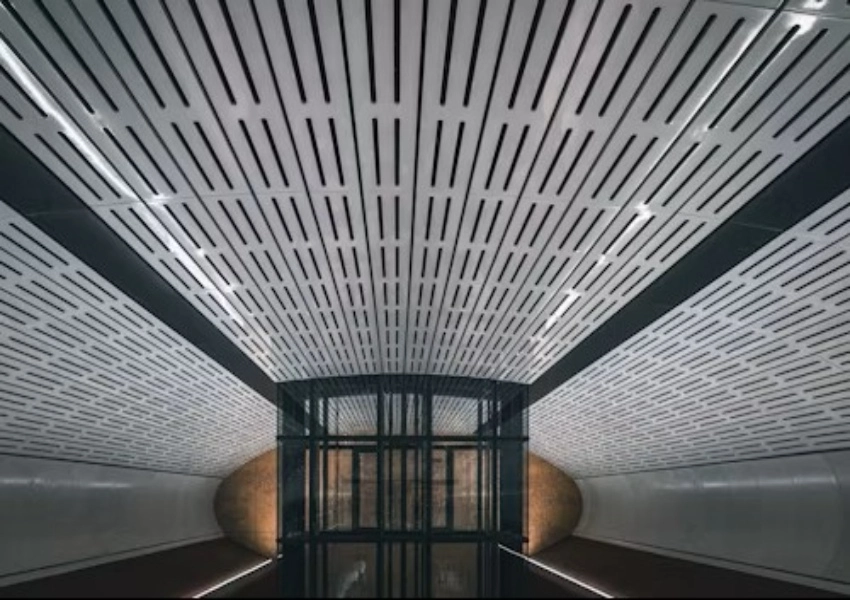
Noise problems in modern buildings rarely come from one loud source. They build up from open workstations, hard floors, glass partitions, public corridors, mechanical equipment, transport announcements, food courts, and lobbies where people keep moving. A plain hard ceiling can make that noise feel sharper. An acoustic metal ceiling changes the room by adding absorption into the largest overhead surface while keeping the durability and access benefits of metal.
The word “acoustic” can be misleading when it is used too broadly. A ceiling may reduce reverberation, but that does not automatically stop sound from traveling between rooms. A good noise control ceiling starts with a clear question: Does the project need absorption inside the room, privacy between rooms, or both? Metal ceilings can help strongly with absorption when perforation and backing are selected well. For sound isolation, walls, sealed partitions, and plenum barriers still matter.
Perforation Makes Metal Panels Absorptive
Solid metal reflects sound. Perforated metal lets sound pass through the face and reach absorptive backing. That is why this ceiling type can work in open offices, corridors, classrooms, transport hubs, and lobbies. The holes may be round, square, rectangular, staggered, diagonal, tightly spaced, or set in a custom pattern. Some holes are small enough that the panel reads as nearly solid from below, while larger holes make the acoustic strategy more visible.
Perforation by itself is not enough. Open area, hole size, spacing, panel depth, and backing material all change performance. A perforated ceiling system can be specified with backing fabric or a batt depending on the room target. If the project team wants a clean commercial acoustic ceiling, perforation should be discussed early, before finish approval and production drawings. Dense perforation, custom graphics, and special borders can add cost and lead time, so acoustics and fabrication need to sit in the same conversation.
Backing Changes the Result
A perforated panel with black non-woven fabric on the back can absorb a moderate amount of sound. Adding fibrous batt above the panel can raise absorption in many tested assemblies. The exact result still depends on the product and test method, so a buyer should ask for acoustic data for the selected panel, not for a vaguely similar ceiling.
Reverberation Is the First Problem to Control
Matter in the office is dealt with in most acoustic solutions first with regard to reverberation. A long tail of sound after a spoken word or impact can make a conversation seem louder and announcements be muffled, and, as a result, people will speak louder. Such a situation can be very tiring, even when no one is shouting. For this reason, sound-absorbing ceiling panels can be very effective in taking the sound out of the reflections in the room. In open-plan offices, the absorption in the ceiling over a large area can make the speech sound less harsh and, in general, reduce the overall level of noise. In conference rooms, the absorption can be higher in order to make voices clearer for people in the room as well as on a telephone call. In hospital corridors and lobbies, the aim is not to create silence but to avoid a harsh acoustic 'edge.'
There is a limit. If the room also needs privacy between enclosed offices, the ceiling should not be treated as the main sound barrier. Sound can pass through gaps, grilles, speakers, lights, and open plenum routes. Walls built to the underside of the structure, sealed top and bottom, or added plenum barriers do the isolation work. The ceiling supports comfort inside the space.
Layout Decides Whether the Ceiling Works in Real Rooms
A noise control ceiling is not only a product choice. Coverage matters. A small strip of absorptive ceiling over a noisy open office will not behave like full-area coverage. Areas intentionally left reflective can also change the result. For example, a presentation area may need some reflection near a podium, while the rest of the room needs absorption to keep speech from spreading.
Open plenum buildings add another layer. Aluminum open cell ceiling system designs can mask the view of services while leaving air movement and lighting placement freer than a closed ceiling. They may not provide the same absorption pattern as full perforated panels, so acoustic islands, baffles, or wall absorption may be needed in selected zones. The design team should review ceiling height, viewing angle, lighting, HVAC, and expected occupancy together.
Baffles and Islands
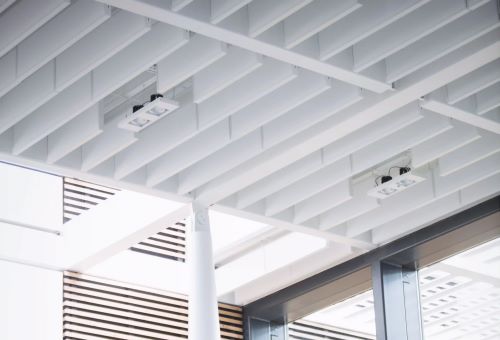
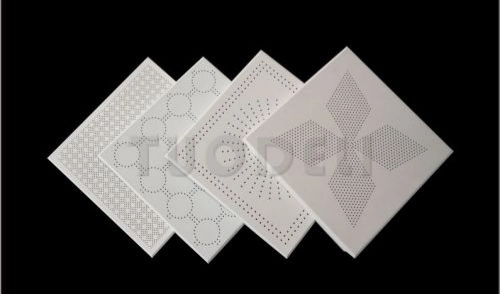
Baffles can be useful in creating an open ceiling or hiding services on the above ceiling. An aluminum O-shaped baffle ceiling system can provide visual interest, partial screening of the plenum, and greater surface interaction for sound to travel upon compared to a solid ceiling slab. The spacing and depth of the baffle would need to be appropriate for creating desired visual density as well as meeting desired acoustic performance.
Where Acoustic Metal Ceilings Fit Best
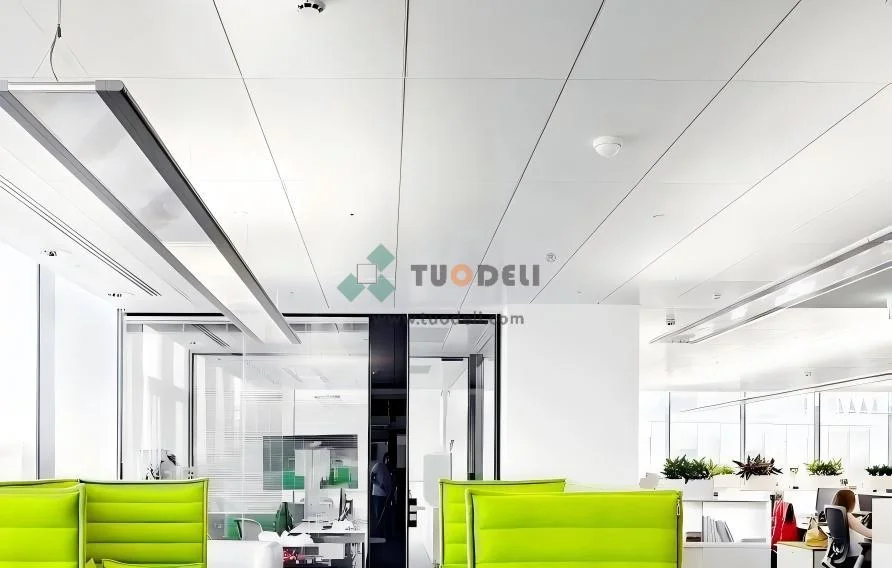
Open offices, for example, contain calls, keyboard noise, short meetings, and glass rooms. So, in order to be able to work in such offices, office acoustic solutions are required that consist of absorptive ceilings as well as of furniture, flooring, partitions, and, if required, sound masking systems. A commercial acoustic ceiling is a large, durable overhead surface that can be cleaned and accessed. Thus, it does not result in a soft-tile grid. Corridors and lobbies have different requirements. People walk through them, stop for conversations, and bring in sound from adjacent rooms. Metal panels are better suited for public areas than most soft materials. Perforation reduces the sharpness of footfall and speech. In transport hubs, acoustic ceiling systems also have to be coordinated with announcements, wayfinding, lighting, fire protection systems, and maintenance access. The acoustic ceiling has to calm down the room without blocking service routes.
Hospitals, schools, and public buildings need a careful area-by-area approach. Some healthcare zones allow acoustic ceiling panels, while certain aseptic or protective spaces may require monolithic ceilings or special conditions. That is not a place for guesswork. The ceiling supplier, architect, and local code team should confirm which type of ceiling is permitted before acoustic performance is discussed.
Supplier Checks Before Ordering
Before ordering a metal acoustic ceiling, buyers should ask for more than a nice sample board. Check the perforation pattern, open area, panel edge, backing fabric, optional batt, finish, cleaning guidance, and whether the ceiling still gives the needed plenum access. Ask how replacement panels will be matched later, especially for public buildings where damaged panels may need to be changed years after handover.
TUODELI's acoustic ceiling options include metal ceiling, baffle, open cell, and perforated directions that can be matched to different commercial spaces. The useful discussion is not simply which product absorbs more sound. It is which ceiling layout, backing, finish, and access method fit the building's daily noise, cleaning, and maintenance pattern. If you would like to learn more, please contact us immediately.
FAQ
Q1: What makes a metal acoustic ceiling absorb sound?
A1: Perforations let sound pass through the metal face, while backing fabric or fibrous batt absorbs part of the sound energy behind the panel.
Q2: Can sound-absorbing ceiling panels block noise between rooms?
A2: Not by themselves. They reduce reverberation inside a room. Walls, sealed partitions, and plenum barriers are needed for strong room-to-room isolation.
Q3: Where does a commercial acoustic ceiling work best?
A3: It fits open offices, corridors, lobbies, schools, hospitals, and transport hubs where noise control, cleaning, and maintenance access all matter.
Other News