
Elevate Interior Aesthetics with Aluminum Curved Baffle Ceiling Systems
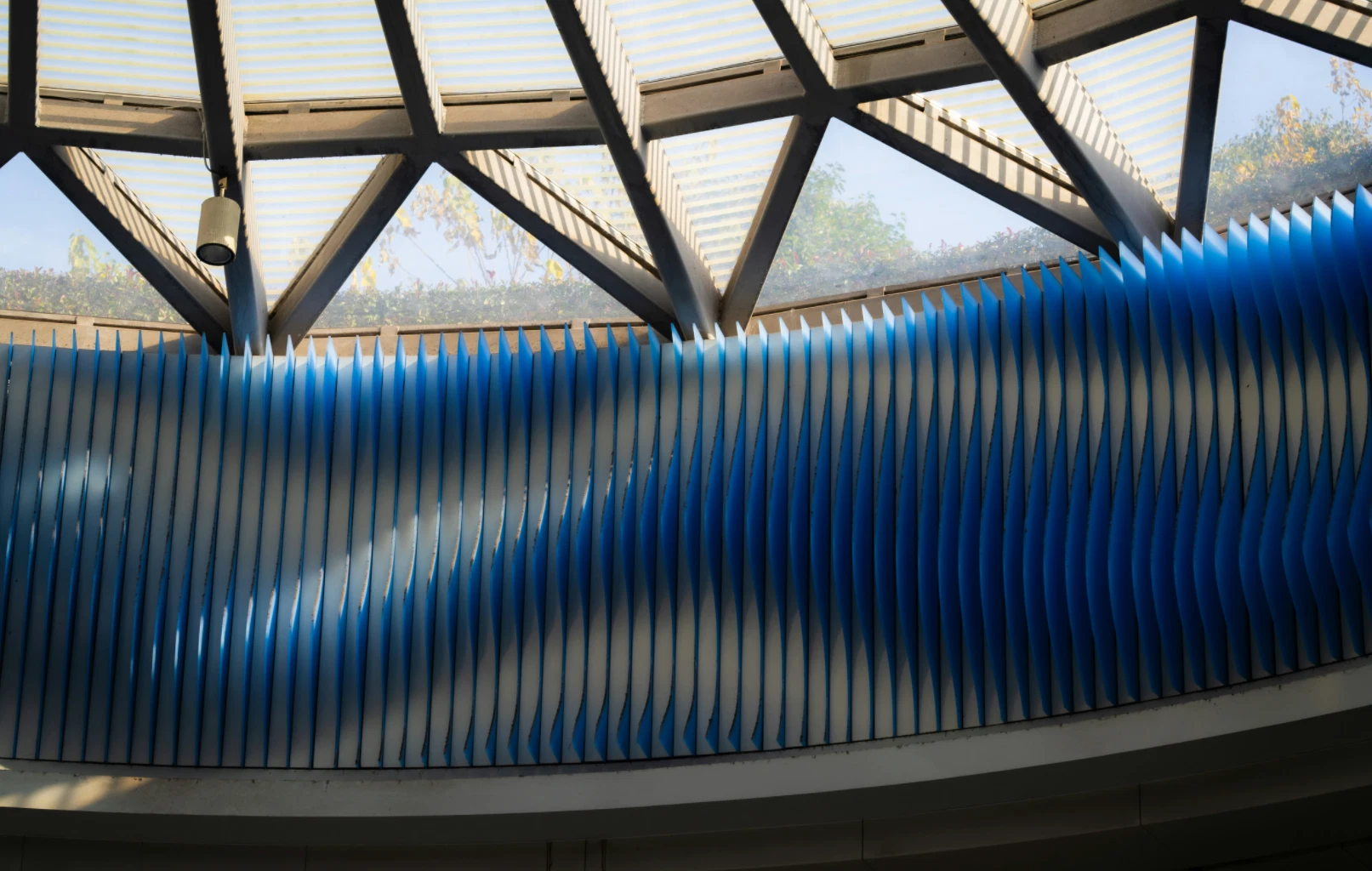
Are flat ceilings making your commercial lobby feel rigid and loud? Many designers face this exact problem. You do not need to add more boring drywall or expensive foam to fix it. The best solution is to change the physical shape of the ceiling itself. By installing an aluminum curved baffle, you instantly solve two major building problems: terrible acoustics and uninspired visuals.
These wave-like structures break up loud echoes and guide foot traffic smoothly through large areas. They also do an excellent job of hiding ugly air conditioning ducts while leaving plenty of room for air to flow. This approach completely changes the way a room feels to the people inside it. Below, we will look at exactly how to implement these systems to solve the noise and design challenges in your next project.
Breaking the Monotony of Flat Public Spaces
Traditional commercial spaces often suffer from a severe lack of visual character. Flat, unbroken surfaces above our heads tend to make large public areas feel cold and strictly institutional. To change this harsh feeling, you need an architectural element that actively pulls the eye upward and adds natural movement.
Creating Visual Flow and Movement
When people walk into an airport terminal or a large shopping mall, they naturally follow the lines of the building. A curved baffle ceiling creates long, flowing waves that act as a visual guide. Instead of staring at a harsh grid, visitors see a soft, rolling pattern that mimics the look of a natural river or wind patterns.
You can space these metal lines tightly together or spread them out, depending on how dramatic you want the wave to look. Builders often use different heights, dropping some sections low and raising others high, to create a massive 3D effect. Instead of settling for basic flat panels, shifting your approach to wave-like structures completely redefines how visitors experience the scale of your building.
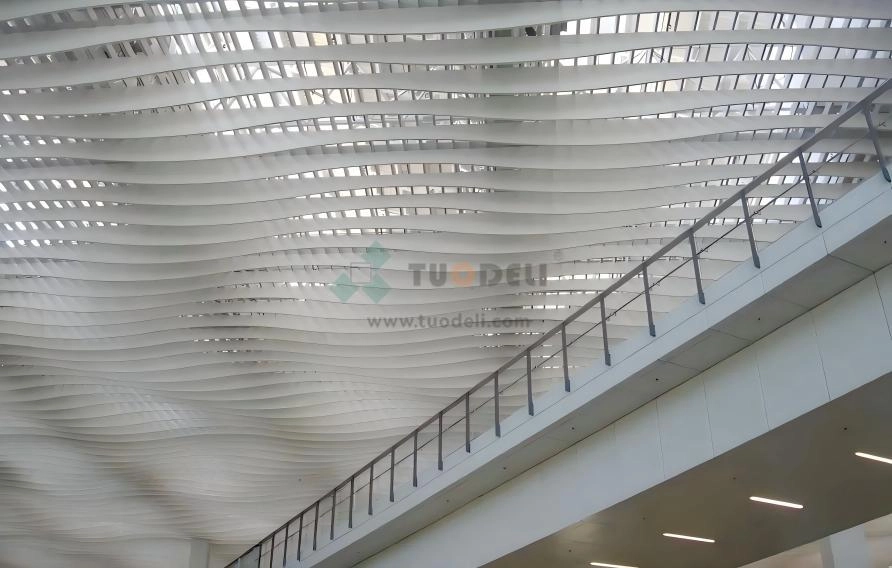
Solving Severe Noise Problems in Open Areas
Big rooms filled with glass windows, concrete floors, and steel beams bounce sound endlessly. You cannot just cover the floor in carpet to fix this. The ceiling is your largest and most effective tool to stop echoes before they travel across the room.
How Wave Shapes Trap Background Sound
When a room is too loud, conversations blur together and people get stressed. An acoustic baffle system fixes this physical problem perfectly. Because the metal hangs down vertically, it exposes two sides and a bottom to the open air. This massively increases the total surface area available to catch bouncing sound waves.
Manufacturers punch thousands of tiny holes into the metal and place soft, sound-absorbing materials inside the hollow cavity. When a sound wave hits the curved metal ceiling, it gets trapped between the hanging walls and loses its energy. Some highly rated systems can reach a Noise Reduction Coefficient of 0.85, wiping out harsh echoes.
Hiding Messy Utility Systems Neatly
Modern buildings require massive air ducts, thick internet cables, and complex water sprinkler systems. Hiding them behind a solid drop ceiling makes daily maintenance a complete nightmare and artificially lowers the height of the room.
The Open Plenum Advantage
Architects use suspended metal baffles to mask these ugly wires while keeping the ceiling feeling tall and open. Because there is open space between each hanging metal piece, the dark pipes above simply blend into the shadows. People walking below only see the beautiful painted metal waves.
When a plumber or electrician needs to fix a leaking pipe, they do not have to break any drywall or remove heavy tiles. They simply reach up through the gaps or unclip a single metal line. If your current ceiling design blocks easy access to vital pipes, moving to an open masking system prevents costly damage during routine repairs and speeds up maintenance work.
Adapting to Irregular Architectural Shapes
Not every room is built like a perfect square box. When architects design sweeping round walls or sloping roofs, standard drop ceiling tiles fail. Workers have to cut square tiles into messy, ugly pieces to make them fit into round corners.
Custom Radius for Any Room
To match a unique building shape, you need materials that bend naturally. Factories can roll and press metal into exact curves, matching a specific 10-foot or 20-foot radius. This means the ceiling perfectly mirrors the curved glass wall right next to it.
You can group these curved lines together to form floating ceiling clouds. These isolated groups of baffles hang freely over specific areas, like a hotel reception desk or a restaurant bar, drawing attention exactly where you want it. This flexibility is a core part of modern interior ceiling design. Designing a space that feels custom-built requires materials that adapt to your specific floor plan, rather than forcing your floor plan to fit a square grid.
Why Wood Fails and Metal Wins
Many designers absolutely love the warm, natural look of wooden waves hanging from a ceiling. However, using real timber in a massive commercial project introduces a host of dangerous and expensive problems that metal easily avoids.
The Economics of Durability
Real wood is incredibly heavy. It requires thick, expensive steel supports to stop it from falling. Wood also catches fire easily, meaning it often fails strict commercial building codes. Furthermore, if you put real wood in a humid environment like an indoor swimming pool or a coastal lobby, it will quickly rot, warp, and grow dangerous mold.
Aluminum solves all of these problems instantly. It is extremely light, easily achieving a Class A1 fire rating for total safety. Best of all, factories can apply a specialized powder coating to the aluminum that looks exactly like real oak, pine, or walnut. You get the beautiful, warm appearance of timber but the 30-year lifespan of solid metal. By choosing the right aluminum curved baffle systems, you eliminate the constant maintenance costs associated with natural materials while keeping the premium look intact.
Conclusion
When standard flat tiles keep cracking and real timber costs too much to maintain, building owners find themselves stuck with loud, ugly public spaces. Traditional methods simply fail to handle the complex acoustics and curved walls of modern architecture. Moving to a curved metal system offers a much smarter direction. It stops terrible echoes, hides your plumbing perfectly, and gives your lobby a stunning, high-end visual flow that never warps or rots. If your upcoming project needs a custom wave design that actually fits your budget and meets strict fire codes, it is time to upgrade your materials. Reach out and contact TUODELI today to discuss the exact radius and color specifications for your next ceiling installation.
FAQs
Q: Why use an aluminum curved baffle?
A: It fixes bad echoes and hides ugly pipes while adding beautiful wave shapes to your room.
Q: Can floating ceiling clouds absorb sound?
A: Yes, an acoustic baffle system catches bouncing sound waves, making noisy rooms much quieter and calmer.
Q: Is a curved metal ceiling hard to maintain?
A: No, suspended metal baffles do not catch much dust and give plumbers easy access to hidden pipes.


