
Can Perforated Panels Balance Privacy and Airflow in Office Facades?
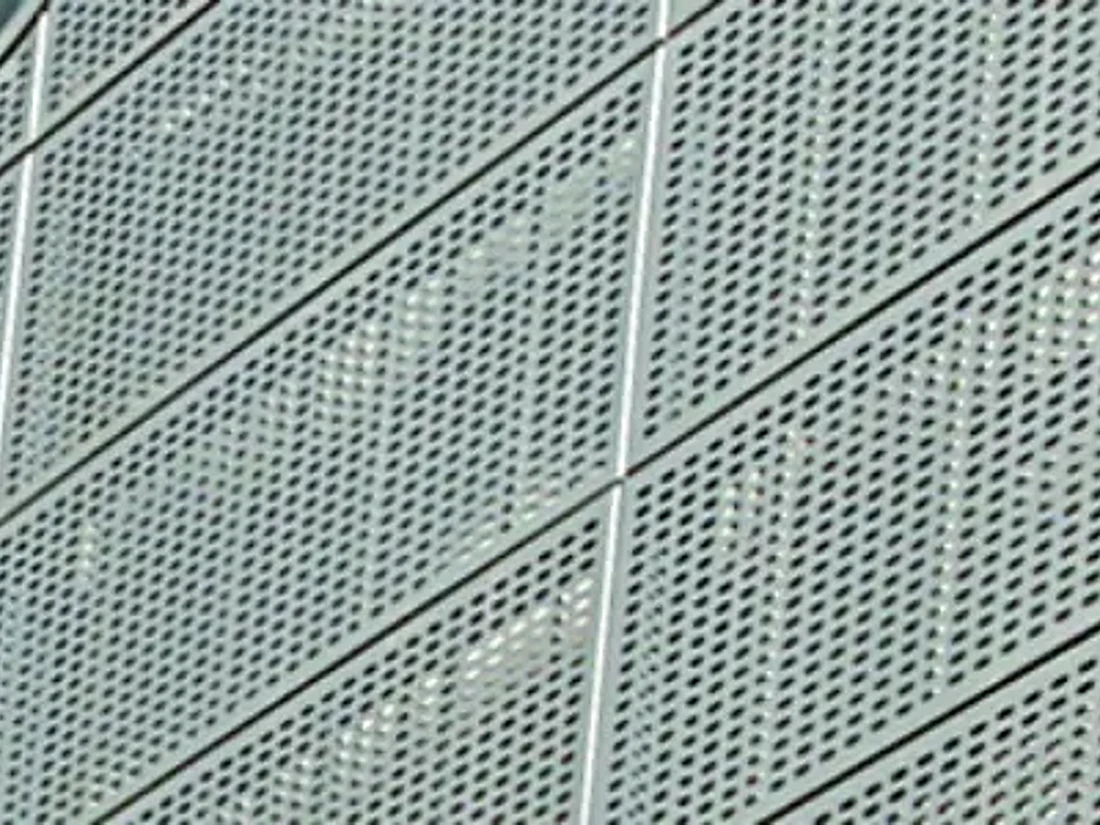
Office facades are no longer judged only from across the street. People work behind them for eight or ten hours, so the facade affects glare, privacy, heat, ventilation, and how exposed the office feels. Perforated panels sit between two needs that often pull against each other: openness and control.
For designers and buyers, the useful question is not whether TUODELI can supply a modern exterior look. The better question is whether the chosen facade panels can filter views, allow air movement, and still give the building a clear identity for daily office use.
What Problem Do Office Facades Need to Solve?
A fully open glass wall can bring brightness, but it may also create glare and privacy pressure. A heavy solid wall can protect privacy, but it may make the office feel closed. Perforated panels give office facades a middle layer, especially where meeting rooms, corridors, stairs, or shared work zones face the outside.
Privacy Without a Closed Wall
Privacy screens do not need to block everything. A perforation pattern can reduce direct sightlines while keeping daylight and some view. This is why perforated panels are useful around office facades that face busy streets, neighboring towers, car parks, or shared courtyards.
Airflow Without a Bare Opening
Air movement matters in balcony edges, equipment screens, shaded walkways, and facade buffer zones. TUODELI lists Perforation facade panels as one product direction for exterior and semi-exterior work where metal panels need controlled openings instead of a bare gap.
How Should Buyers Compare Perforation Patterns?
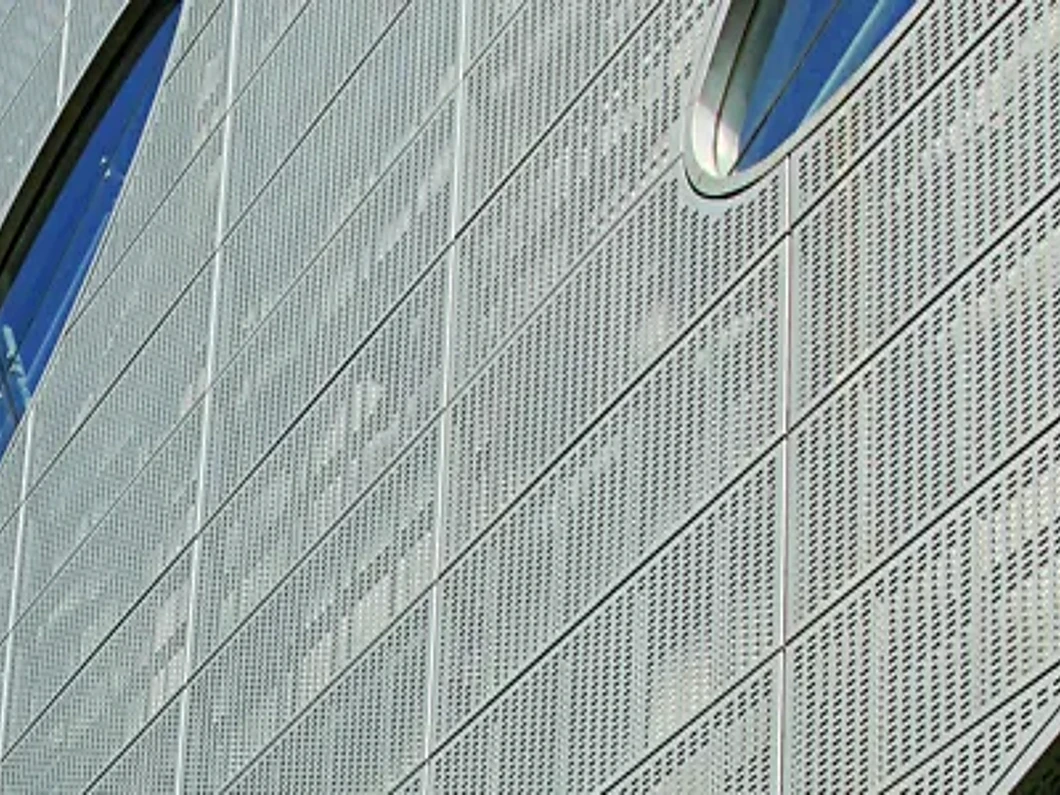
Pattern choice should start with the building problem, not with the most dramatic catalog image. A dense pattern may improve privacy but reduce outward visibility. A large open pattern may feel lighter but expose more of the interior. Good facade panels make this tradeoff clear before production starts.
Design need | Better panel direction | Buyer checkpoint |
More privacy | Smaller openings or denser pattern | Check sightlines from street level and nearby buildings. |
More airflow | Higher open area and suitable backing space | Confirm wind, rain, drainage, and cleaning conditions. |
Stronger identity | Custom rhythm, color, or panel grouping | Review mockups at real viewing distance, not only on a screen. |
Lower service pressure | Durable finish and accessible fixing method | Ask how panels are cleaned, removed, and replaced. |
Treat Pattern as Performance
A perforation pattern is part of performance. On office facades, it decides what workers see, what outsiders can see, how much sun reaches the glass, and how the building reads at different times of day. Perforated panels should be reviewed by the architect, facade consultant, owner, and main contractor together.
Match Panels to the Support System
Even a good pattern can perform poorly if the support system is not clear. Buyers comparing metal panels should confirm panel thickness, fixing direction, backing frame, drainage route, and replacement access. These details affect whether privacy screens remain neat after wind, cleaning, and routine building service.
Where Can Perforated Panels Create the Most Value?
The strongest use cases are not always the largest office facades. Perforated panels often create high value in places where the building needs selective screening: elevator lobbies facing the street, office staircases, parking levels, service balconies, rooftop equipment zones, and glass meeting rooms that need privacy from outside views.
Street-Facing Offices Need Real Sightline Tests
For street-facing office facades, privacy screens can soften direct views without sealing the room. The open area should be tested from both sides. A panel that feels private from straight ahead may be more open from an angle, especially at night when the office interior is brighter than the street.
Transition Areas Need Ventilation and Control
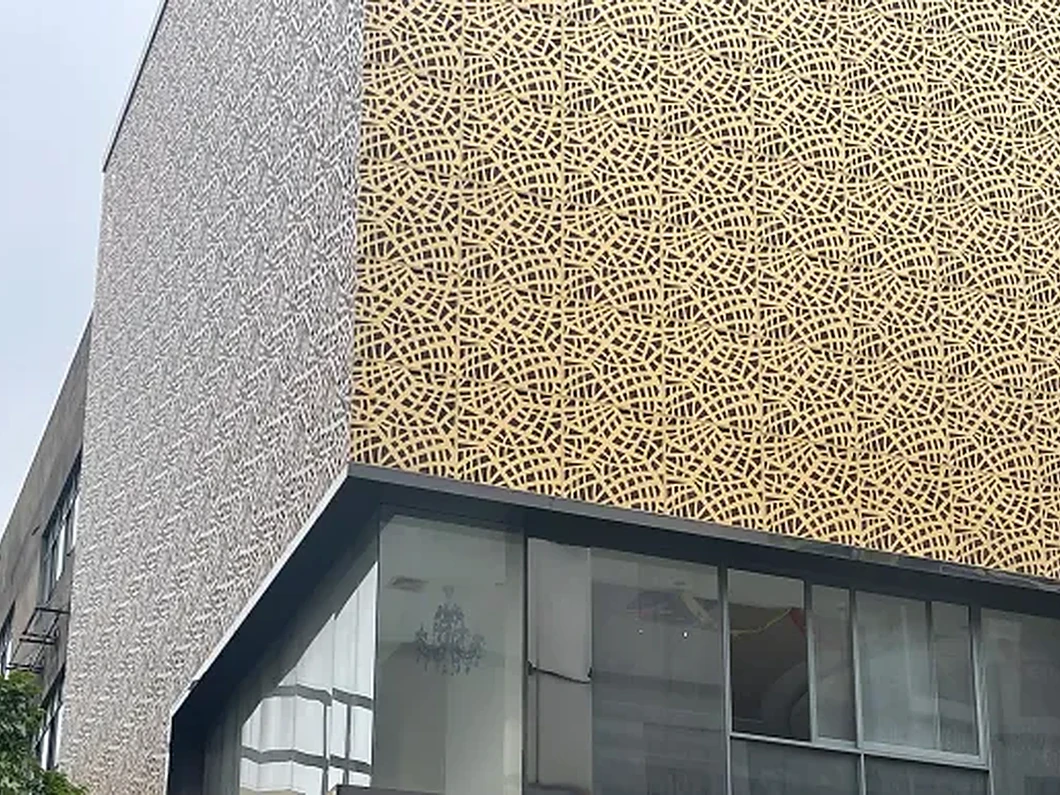
Perforated metal panels also work around covered walkways, outdoor corridors, and equipment zones where sun, wind, and visibility must be controlled together. In some projects, Single skin facade panels can also be compared when the design needs a simple exterior layer with a clear module and finish direction.
What Details Should Be Confirmed Before Fabrication?
Office facade orders usually need approval from several sides: architect, owner, facade consultant, contractor, and sometimes the tenant. Before fabrication, the team should confirm perforation size, open area, panel thickness, finish, fixing direction, wind load assumptions, drainage, cleaning access, and replacement logic.
Mockups Should Be Viewed From Real Distance
A mockup is especially useful when privacy screens are part of the facade. Looking at a sample indoors is not enough. The pattern should be checked from the street, from inside the office, and under both daylight and evening lighting. Perforated panels can look very different when backlit.
How Can Procurement Reduce Facade Rework?
Facade rework is expensive because it usually appears late: after shop drawings are approved, after the backing frame is fixed, or after a sample panel looks different on site. Buyers can reduce this pressure by treating perforated panels as a system purchase. The order should not only list panel size and color; it should also include pattern direction, open area, fixing detail, edge return, and replacement method.
Confirm Inside and Outside Views
Office facades must be checked from both sides. From outside, the owner may want a clean brand image. From inside, employees still need daylight and a comfortable view. Privacy screens that solve one side and ignore the other can lead to complaints after move-in. A simple viewing test from the street and from the work zone can prevent that mismatch.
Keep Replacement Logic in the Order
Facade panels are exposed to weather, cleaning, and possible impact. Even a durable finish needs a replacement plan. Buyers should keep a record of panel thickness, color code, pattern file, and fixing detail so that one damaged module can be replaced without remaking a whole elevation. This is especially important for custom perforated panels.
Move From Design Intent to Supplier Review
For projects with several elevations, the same perforation may not suit every side. A west-facing office facade may need stronger sun control, while a courtyard side may need more view and less screening. Treating every elevation as identical can save time during quoting, but it may create comfort problems later. Good facade panels are selected by location, not only by one preferred pattern.
Procurement should also keep the pattern file under control. If a facade uses a custom rhythm, the drawing revision, hole size, edge margin, and color code need to be saved with the order. Without that record, one later replacement panel can become a small custom project instead of a normal maintenance task.
When the pattern, open area, and fixing concept are close to final, buyers can review TUODELI Solution information to connect the panel choice with public-space, commercial, and long-term maintenance needs.
After that review, Contact Us is the practical next step for discussing drawings, finish direction, and facade panel details for office facade applications.
Conclusion
Perforated panels are useful because they do not force office facades into a simple open-or-closed choice. They can act as privacy screens, airflow layers, sun filters, and brand surfaces at the same time. The best result comes from matching pattern, open area, finish, and fixing method to the exact facade problem.
FAQs
Q1: Can perforated panels improve privacy on office facades?
A1: Yes. Perforated panels can reduce direct sightlines while still allowing daylight, partial views, and airflow when the open area is chosen carefully.
Q2: Are metal panels suitable for exterior facade panels?
A2: Metal panels are commonly used for facade panels because they can provide durable finishes, custom patterns, and repeatable modules for exterior or semi-exterior use.
Q3: How should buyers choose privacy screens for a facade?
A3: Buyers should compare the pattern, open area, material thickness, finish, fixing method, and maintenance access before choosing privacy screens for office facades.


