
Acoustic Ceiling Clouds Guide: Innovative Design and Sound Control Ideas
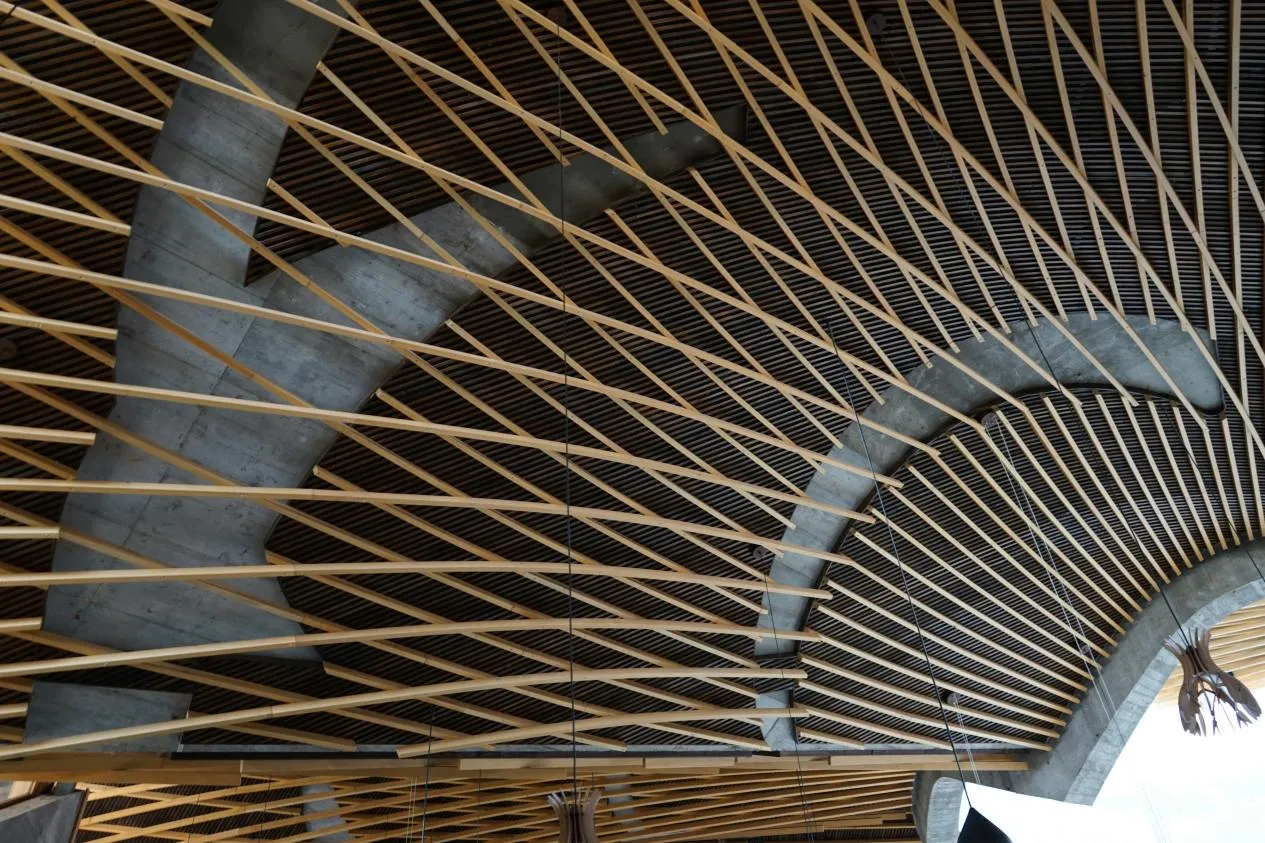
Step into a lively technology center, a current open-layout workspace, or a well-liked upscale eatery. You will spot a shared issue right away. It is the bothersome buzz of ambient sound. In this setup, each key press, call alert, and personal talk echoes against the glass barriers and solid ground. Individuals often raise their voices simply to communicate over a short distance. This situation highlights precisely where current overhead planning intervenes effectively. In particular, it involves the application of airborne elements that dangle freely.
For planners and property holders, the aim extends past merely providing shelter above. It centers on forming an environment where individuals can truly focus their thoughts. Acoustic ceiling clouds have emerged as a leading option for business areas. They address the sound challenge without concealing the appealing structural frame of the edifice. Whether handling a 50,000-square-foot terminal in an airport or a compact entry in a shop, selecting suitable sound management concepts can transform the overall atmosphere of the area.
The Professional Approach to Noise Reduction
Earlier, correcting an overly noisy space involved fitting a complete lowered overhead from barrier to barrier. Such methods typically caused the area to seem confined and restricted. Now, sound dampening occurs in a more calculated manner. By suspending separate overhead elements, you can focus on particular zones where noise peaks most. For example, place them above a meeting surface or a crowded welcome station. These elements capture audio waves on two occasions. First, as waves rise upward. Second, as they reflect from the upper framework.
Shifting from a simple grasp of sound issues to detailed audio efficiency demands examining material responses closely. The process goes beyond mere surface coverage. It involves picking the appropriate thickness and support layers. To achieve optimal outcomes, consider the evaluations that experts apply to gauge effectiveness in business settings.
Meeting the 0.70 to 0.90 NRC Standard
The frequent measure that specialists discuss is the Noise Reduction Coefficient, known as NRC. A score of 0.0 indicates the surface acts like a reflector for audio, sending back all waves. A score of 1.0 suggests it functions like an uncovered opening, taking in every portion of sound. Many superior acoustic ceiling clouds, particularly those with drilled metal, reach an ideal range of 0.70 to 0.90 NRC. This level means they take in 70% to 90% of the audio that contacts them. If you include a mineral wool layer behind a drilled metal section, performance can rise to the upper range. As a result, the space feels noticeably calmer.
Managing Reverberation Time for WELL Standards
Absorbing audio represents only part of the equation. We must also address reverberation duration. This refers to the time required for a sound to fade in an area. The WELL Building Standard outlines firm guidelines for handling echoes, notably in Features 78 and 80. These aim to reduce tension among occupants. In an open workspace, the guideline recommends full overhead coverage with at least 0.90 NRC. For meeting areas, partial coverage of 50% at 0.80 NRC may suffice. Adhering to these practical figures prevents an overly muted space. At the same time, it ensures talks remain confidential and distinct.
Why Metal Ceiling Systems Win the Durability Test
Selecting supplies for acoustic ceiling clouds leads many to choose flexible fiber or mineral sections. Yet, in busy business structures, these options frequently droop or develop mildew when moisture levels increase. This explains the growing preference for metal ceiling systems. Aluminum and steel offer remarkable resilience. They resist water uptake. They lack the biological elements that promote mildew growth. Moreover, they endure 25 to 50 years with minimal upkeep.
The move to metal involves more than robustness. It also concerns simple upkeep routines. In settings like medical centers or cooking areas, where cleanliness matters greatly, a wipeable surface proves essential. It must preserve audio efficiency during cleaning. Metal achieves this ideal combination of a hygienic face and effective sound intake.
The Power of Aluminum and Sustainability
One of the coolest things about aluminum is that it is almost 100% recyclable. In a world where green building certifications like LEED are more important than ever, using metal is a smart move. About 90% of the aluminum used in the building industry today gets recycled at the end of its life. Also, metal panels do not release any VOCs (Volatile Organic Compounds), which means the air inside your building stays cleaner and safer for the people working there. If you want to see how these sustainable materials look in a real project, you can always contact the TUODELI team to discuss your specific needs.
Custom Perforations and Graphic Designs
Metal allows for a level of customization that fiber tiles just can't match. You can specify round, square, or even rectangular holes. These holes can be placed in a tight grid or a staggered pattern to create a unique visual look. Some manufacturers even offer "graduated" designs where the holes change size across the panel to create a 3D effect. This turns your sound control ideas into a piece of art. By keeping a solid border around the edge of the panel, you prevent it from bending or losing its shape, keeping the lines of your modern ceiling design sharp and professional.
Creative Layouts for Suspended Ceiling Islands
The appeal of a "cloud" lies in its freedom from wall alignment. You can position them in rings, wedges, or extended "strips" that guide movement through a hallway. Planners increasingly avoid uniform, level planes in favor of multi-level, spatial configurations. Adjusting the elevation of various suspended ceiling islands introduces dynamism to the environment. This approach gains traction in expansive entrances or transport hubs. There, it disrupts vast, even overhead surfaces effectively.
Transitioning from a routine framework to a tailored island arrangement requires attention to boundaries. A typical full-span overhead conceals the support behind perimeter angles. In contrast, a cloud reveals its side. Here, the project's "completion" truly matters. You require a method that appears equally appealing from the side as from underneath.
Using Perimeter Trim for a Clean Edge
Professionals achieve a premium appearance through metal perimeter trim. This creates a seamless, even surround for the cloud. Factory-bent versions allow for winding shapes or flawless rounds. These trims often consist of 1-foot segments that connect easily. Options include a slim "blade" style for a narrow profile or a "hidden" variant that conceals the support fully. The trim elevates the island to resemble a suspended architectural feature, rather than an incomplete effort.
Integrating Light and HVAC Systems
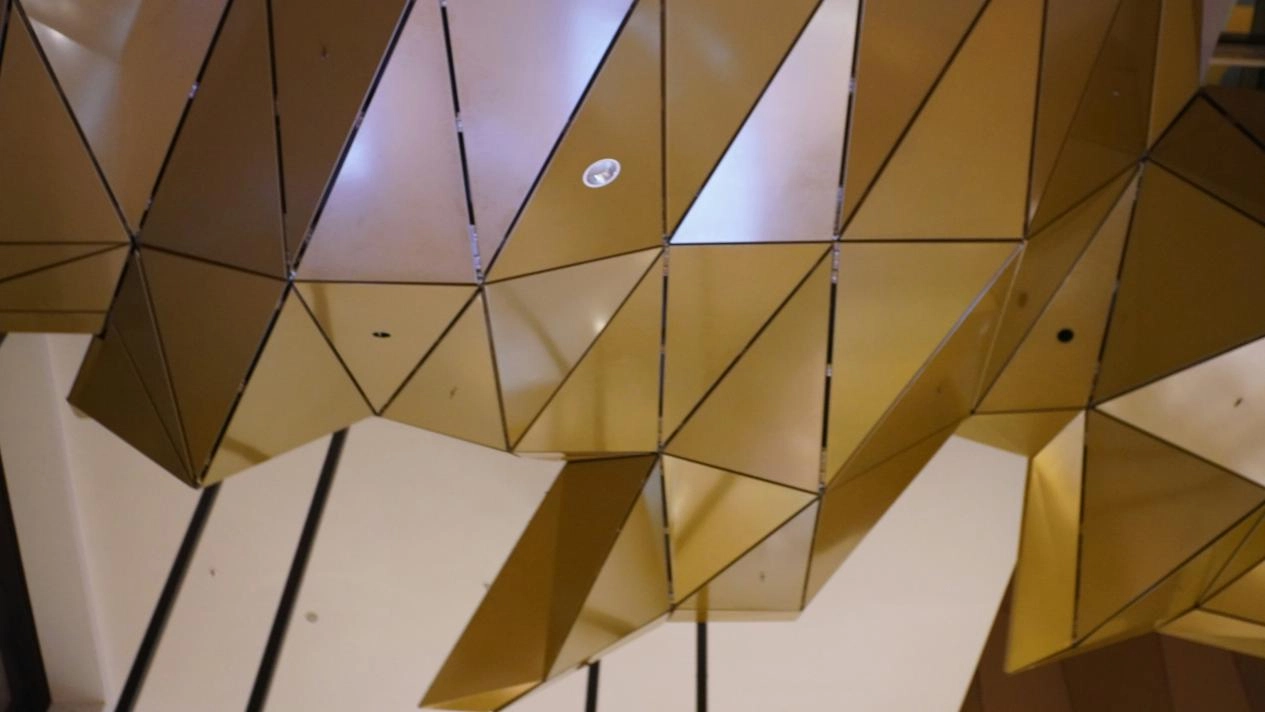
A valuable setup suggestion for clouds involves early lighting planning. With open sides, clouds offer ample flexibility for positioning fixtures above or within sections. In an exposed chamber arrangement, fixtures can emerge through supports to form a blocky, ventilated pattern. This suits display zones or exhibition areas, where emphasizing items counts. Given the strength of these metal sections, they readily bear the load of ventilation outlets and audio devices. No additional reinforcements become necessary.
Technical Best Practices for Long-Term Safety
We can't talk about commercial ceiling safety without mentioning the boring-but-important stuff: fire and earthquakes. In the United States and many other regions, building code compliance is a huge hurdle. If your ceiling forms part of a return air plenum, it must be Class A rated. This means it has the lowest possible flame spread and smoke development. Metal naturally meets these requirements, which is why it is the go-to for schools and hospitals.
Beyond fire, the way the ceiling is tied to the building's structure matters. A heavy cloud hanging in the middle of a room needs to stay there, even if the building shakes. This is where the quality of the suspension systems and the engineering behind the layout become your best friends during the inspection phase.
Seismic and Wind Load Considerations
In places like California or Japan, a seismic ceiling grid is a must. This grid allows the ceiling to move a bit without crashing into the walls. Even for interior clouds, some areas require specific testing (like ASTM E-580) to prove the system won't fail during a quake. If you are installing clouds in a semi-outdoor area, like a building entrance or a soffit, you also need to ask for a wind load test report. You want proprietary data that shows the panels can handle both positive and negative wind pressure so they don't fly off during a storm.
Maintenance and Cleaning Tips
Building overseers prefer overheads that simplify repairs. Should a section sustain harm, swift replacement becomes feasible. "Snap-up" or "clip-in" arrangements allow removing and installing a single unit without disturbing the framework. For minor marks, a soft eraser or moist fabric often suffices for cleaning. This on-site maintenance feature ranks highly among reasons for favoring metal over textiles, which tend to mark permanently and require disposal.
Conclusion
Developing an efficient and attractive business environment demands balancing visual appeal with audio quality. Acoustic ceiling clouds provide a contemporary, adaptable method to handle sound dampening while preserving openness and illumination. From the superior audio capabilities of drilled metal ceiling systems to the creative scope of personalized suspended ceiling islands, possibilities abound. Selecting resilient supplies like aluminum and adhering to expert setup advice on boundary trim and support positioning ensures enduring results. If preparing for an upcoming initiative or seeking estimates for tailored metal sections, consider reaching out to TUODELI for professional advice.
FAQs
Q: Do acoustic ceiling clouds really work as well as full ceilings?
A: Yes. Because they have two exposed sides, they absorb sound traveling up and sound reflecting down, often providing better NRC ratings.
Q: Can I get metal ceiling systems in colors other than white?
A: Absolutely. Metal panels can be powder-coated in almost any color, including wood-grain patterns that look like real timber.
Q: How do I choose the right size for my suspended ceiling islands?
A: It depends on the room size and noise level. A common professional tip is to cover 20% to 50% of the ceiling area for good sound control.


